



Je cadeautjes zeker op tijd in huis hebben voor de feestdagen? Kom langs in onze winkels en vind het perfecte geschenk!
- Afhalen na 1 uur in een winkel met voorraad
- Gratis thuislevering in België vanaf € 30
- Ruim aanbod met 7 miljoen producten
Je cadeautjes zeker op tijd in huis hebben voor de feestdagen? Kom langs in onze winkels en vind het perfecte geschenk!
- Afhalen na 1 uur in een winkel met voorraad
- Gratis thuislevering in België vanaf € 30
- Ruim aanbod met 7 miljoen producten





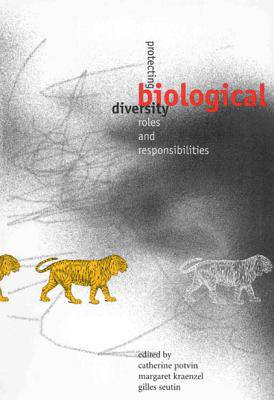
Protecting Biological Diversity
Roles and Responsibilities
Catherine Potvin, Margaret Kraenzel, Gilles Seutin
Hardcover | Engels
€ 177,45
+ 354 punten
Uitvoering
Omschrijving
Catherine Potvin, Margaret Kraenzel, and Gilles Seutin asked scientists from developing countries to summarize their experiences of international collaboration and to suggest attitudes and practices that would lead to more fruitful exchanges with northern scientists. They also asked scholars to provide an analytical framework in which these issues could be discussed and to identify possible solutions to questions such as: What are the responsibilities of first world scientists involved in conservation actions in developing countries? How can biologists work toward the protection of biodiversity while being respectful of the human desire for a better future? The resulting papers analyse specific situations encountered in countries such as Democratic Republic of Congo, Madagascar, India, and Panama and discuss the philosophical basis for environmental research. They also examine the work of two institutions whose projects in developing countries have been particularly effective through outreach and attention to local values and needs and who propose a pluralistic view of conservation biology ethics. Protecting Biological Diversity seeks to encourage students and professionals involved in conservation projects to adopt culturally sensitive attitudes that will lead to greater effectiveness and efficiency in conservation and greater respect for the differences of others. Contributors include H Baser (Canadian International Development Agency, Ottawa), P. Butler (Rare Centre for Tropical Conservation, Saint Lucia), R. Cansari (McGill University), A.K. Gupta (Indian Institute of Management, India), M. Martinez-Velarde (Universidad Santa Maria la Antigua, Panama), L. Mubalama (Institut congolais pour la conservation de la nature, Zaire), B.J Norton (School of Public Policy, Atlanta), L. Packard (Texas A&M University), M.H. Parizeau (Université Laval), L.H. Rakotovao (Centre national de recherche en environnement, Madagascar), V. Regis (Rare Centre for Tropical Conservation (Saint Lucia), P. Weeks (The Environmental Institute of Houston), and G. Wigley (Ottawa).
Specificaties
Betrokkenen
- Auteur(s):
- Uitgeverij:
Inhoud
- Aantal bladzijden:
- 160
- Taal:
- Engels
Eigenschappen
- Productcode (EAN):
- 9780773521582
- Verschijningsdatum:
- 20/09/2001
- Uitvoering:
- Hardcover
- Formaat:
- Genaaid
- Afmetingen:
- 152 mm x 229 mm
- Gewicht:
- 349 g


Alleen bij Standaard Boekhandel
+ 354 punten op je klantenkaart van Standaard Boekhandel
CADEAU


Beoordelingen
We publiceren alleen reviews die voldoen aan de voorwaarden voor reviews. Bekijk onze voorwaarden voor reviews.