


- Afhalen na 1 uur in een winkel met voorraad
- Gratis thuislevering in België vanaf € 30
- Ruim aanbod met 7 miljoen producten
- Afhalen na 1 uur in een winkel met voorraad
- Gratis thuislevering in België vanaf € 30
- Ruim aanbod met 7 miljoen producten





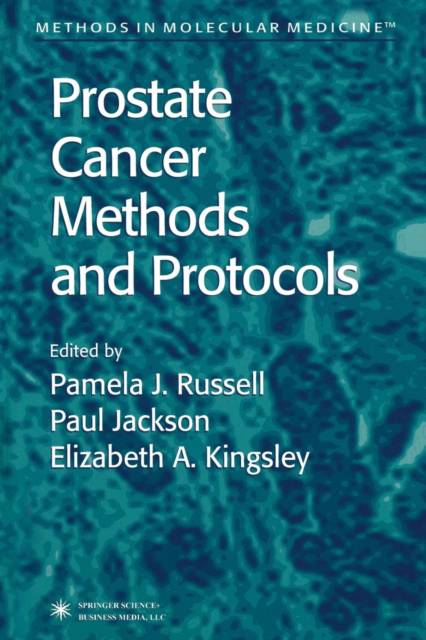
Prostate Cancer Methods and Protocols
€ 183,45
+ 366 punten
Omschrijving
Prostate cancer is the second leading cancer in men in Western society. A major concern, and an area of intensive research, involves understanding why certain prostate cancers remain localized or indolent, whereas others become aggressive and metastasize. The differences between these cancer types have profound implications for patients and physicians. Indolent d- ease, which grows very slowly, generally does not cause any problems to the patient, whereas aggressive disease requires immediate treatment, the earlier the better. At present, there are no markers that discriminate between these two entities, thus causing a dilemma for the management of patients who have recently been diagnosed. The aim of Prostate Cancer Methods and Protocols is to explore cutting-edge molecular methods that may have the potential to reveal markers of disease for use in more accurate diagnoses of prostate c- cer and, consequently, to lead to new treatment strategies. This book provides a comprehensive collection of both in vitro and in vivo step-by-step protocols currently used by leaders in prostate cancer research, advice on approaches that can be used in the study of prostate cancer, as well as reviews covering areas less amenable to laboratory research, such as environmental factors in prostate cancer, to provide the reader with an overview of the prostate cancer research field as it currently stands.
Specificaties
Betrokkenen
- Uitgeverij:
Inhoud
- Aantal bladzijden:
- 403
- Taal:
- Engels
- Reeks:
- Reeksnummer:
- nr. 81
Eigenschappen
- Productcode (EAN):
- 9781489938503
- Verschijningsdatum:
- 11/08/2013
- Uitvoering:
- Paperback
- Formaat:
- Trade paperback (VS)
- Afmetingen:
- 152 mm x 229 mm
- Gewicht:
- 553 g

Alleen bij Standaard Boekhandel
+ 366 punten op je klantenkaart van Standaard Boekhandel
Cadeau

AANGERADEN


Beoordelingen
We publiceren alleen reviews die voldoen aan de voorwaarden voor reviews. Bekijk onze voorwaarden voor reviews.