


- Afhalen na 1 uur in een winkel met voorraad
- Gratis thuislevering in België vanaf € 30
- Ruim aanbod met 7 miljoen producten
- Afhalen na 1 uur in een winkel met voorraad
- Gratis thuislevering in België vanaf € 30
- Ruim aanbod met 7 miljoen producten





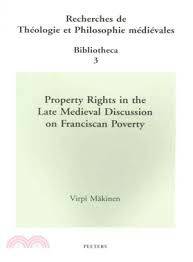
Property Rights in the Late Medieval Discussion on Franciscan Poverty
V Makinen
€ 40,00
+ 80 punten
Omschrijving
Property Rights in the Late Medieval Discussion on Franciscan Poverty contributes to our understanding of the history of the concept of individual natural rights by tracing the controversies surrounding the Franciscan ideal of absolute poverty from the 1250s to the 1320s. Virpi Makinen, Th.D., analyzes the complex legal, moral, and theological arguments for and against the Franciscan ideal of giving up all rights over property - an ideal that the Franciscans argued was in perfect imitation of Christ and the Apostles. Makinen pays particular attention to the concepts of rights, especially to the distinctions between dominion (dominium), right (ius) and factual use (usus facti). She discusses the arguments made by both the defenders of the Franciscan claim of apostolic poverty (Bonaventure and Bonagratia of Bergamo) and the attackers, most of whom were secular clerics (such as William of Saint-Amour, Gerard of Abbeville, Henry of Ghent, and Godfrey of Fontaines). Makinen then analyzes the support the Order received from the papacy, and how this support was undermined by Pope John XXII's vehement attack on the Franciscans in the 1320s. The book shows how the debate concerning Franciscan poverty gave rise to a new language of rights, which paved the way to the idea of individual natural rights.
Specificaties
Betrokkenen
- Auteur(s):
- Uitgeverij:
Inhoud
- Aantal bladzijden:
- 224
- Taal:
- Engels
- Reeks:
- Reeksnummer:
- nr. 3
Eigenschappen
- Productcode (EAN):
- 9789042909403
- Verschijningsdatum:
- 8/10/2001
- Uitvoering:
- Paperback
- Formaat:
- Trade paperback (VS)
- Afmetingen:
- 157 mm x 228 mm
- Gewicht:
- 390 g


Alleen bij Standaard Boekhandel
+ 80 punten op je klantenkaart van Standaard Boekhandel
Cadeau

AANGERADEN


Beoordelingen
We publiceren alleen reviews die voldoen aan de voorwaarden voor reviews. Bekijk onze voorwaarden voor reviews.