


- Afhalen na 1 uur in een winkel met voorraad
- Gratis thuislevering in België vanaf € 30
- Ruim aanbod met 7 miljoen producten
- Afhalen na 1 uur in een winkel met voorraad
- Gratis thuislevering in België vanaf € 30
- Ruim aanbod met 7 miljoen producten





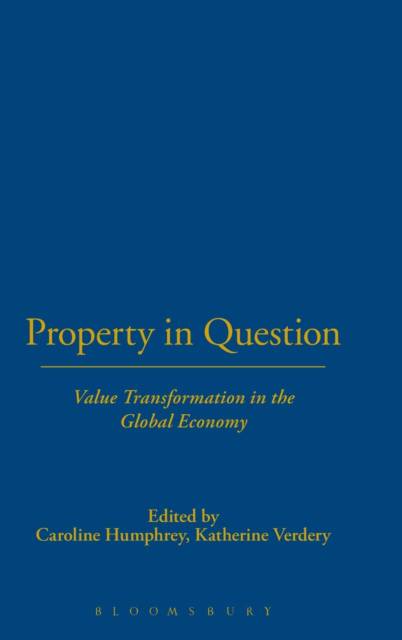
Property in Question
Value Transformation in the Global Economy
€ 305,45
+ 610 punten
Omschrijving
How has it come about that indigenous cultures, body parts, and sequences of musical notes are considered property? How has the movement from collective to privatized systems affected notions of property? At what point in transaction chains do native cultures, indigenous medicines, or cyberdata become objects and therefore propertized, and what are the social, economic, and ethical considerations for such transformations? Addressing these hotly contested issues and many more, Property in Question interrogates the very concept of property and what is happening to it in the contemporary world, in case studies ranging from Romania to Kazakhstan, Africa to North America. The book examines not only the changing character of the property concept, but also its ideological foundations and political usages. Authors address bio-transactions, music copyright, cyberspace, oil prospecting, debates over privatization of land and factories, and dilemmas arising with new forms of ownership of businesses. Offering a fresh perspective on contemporary economic transformation, this volume is a long overdue investigation of the power of the private property concept, as well as an exploration of how the global economy may be subtly, even invisibly, changing what property means and how we relate to it.
Specificaties
Betrokkenen
- Uitgeverij:
Inhoud
- Aantal bladzijden:
- 320
- Taal:
- Engels
- Reeks:
Eigenschappen
- Productcode (EAN):
- 9781859738825
- Verschijningsdatum:
- 1/08/2004
- Uitvoering:
- Hardcover
- Formaat:
- Genaaid
- Afmetingen:
- 154 mm x 242 mm
- Gewicht:
- 630 g

Alleen bij Standaard Boekhandel
+ 610 punten op je klantenkaart van Standaard Boekhandel

Beoordelingen
We publiceren alleen reviews die voldoen aan de voorwaarden voor reviews. Bekijk onze voorwaarden voor reviews.