


- Afhalen na 1 uur in een winkel met voorraad
- Gratis thuislevering in België vanaf € 30
- Ruim aanbod met 7 miljoen producten
- Afhalen na 1 uur in een winkel met voorraad
- Gratis thuislevering in België vanaf € 30
- Ruim aanbod met 7 miljoen producten





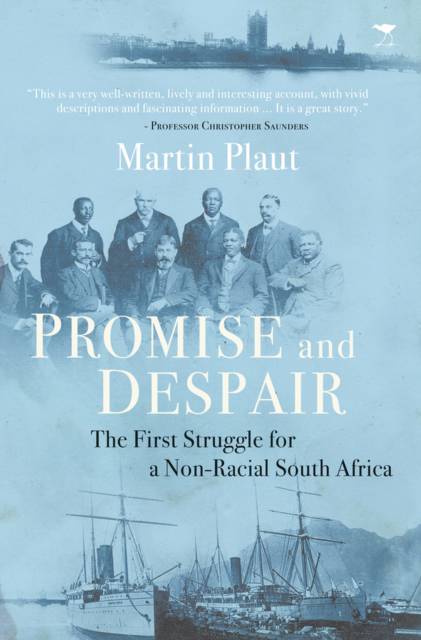
Promise and Despair
The First Struggle for a Non-Racial South Africa
Martin Plaut
Paperback | Engels
€ 20,95
+ 41 punten
Uitvoering
Omschrijving
Most people believe that black South Africans obtained the vote for the first time in 1994. In fact, for almost a century suitably qualified black people had enjoyed the vote in the Cape and Natal, and in certain constituencies had decided the outcome of parliamentary elections. Little wonder, then, that when the first South Africa came about in 1910, black people were keen to see the principle of non-racialism entrenched in the constitution that was drawn up for the new Union. This is the story of that struggle. Its centrepiece is a lively account of the delegation that travelled to London in mid-1909 to lobby for a non-racial constitution.
Specificaties
Betrokkenen
- Auteur(s):
- Uitgeverij:
Inhoud
- Aantal bladzijden:
- 288
- Taal:
- Engels
Eigenschappen
- Productcode (EAN):
- 9781431423750
- Verschijningsdatum:
- 1/10/2016
- Uitvoering:
- Paperback
- Formaat:
- Trade paperback (VS)
- Afmetingen:
- 155 mm x 234 mm
- Gewicht:
- 362 g


Alleen bij Standaard Boekhandel
+ 41 punten op je klantenkaart van Standaard Boekhandel
Cadeau

AANGERADEN


Beoordelingen
We publiceren alleen reviews die voldoen aan de voorwaarden voor reviews. Bekijk onze voorwaarden voor reviews.