


- Afhalen na 1 uur in een winkel met voorraad
- Gratis thuislevering in België vanaf € 30
- Ruim aanbod met 7 miljoen producten
- Afhalen na 1 uur in een winkel met voorraad
- Gratis thuislevering in België vanaf € 30
- Ruim aanbod met 7 miljoen producten





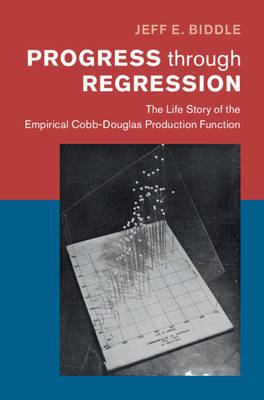
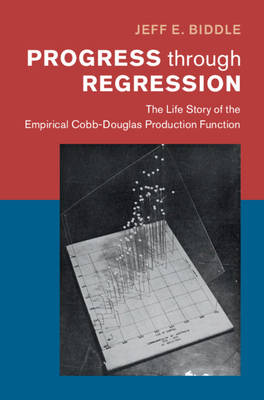
Progress Through Regression
The Life Story of the Empirical Cobb-Douglas Production Function
Jeff E Biddle
€ 209,45
+ 418 punten
Uitvoering
Omschrijving
The Cobb-Douglas regression, a statistical technique developed to estimate what economists called a 'production function', was introduced in the late 1920s. For several years, only economist Paul Douglas and a few collaborators used the technique, while vigorously defending it against numerous critics. By the 1950s, however, several economists beyond Douglas's circle were using the technique, and by the 1970s, Douglas's regression, and more sophisticated procedures inspired by it, had become standard parts of the empirical economist's toolkit. This volume is the story of the Cobb-Douglas regression from its introduction to its acceptance as general-purpose research tool. The story intersects with the histories of several important empirical research programs in twentieth century economics, and vividly portrays the challenges of empirical economic research during that era. Fundamentally, this work represents a case study of how a controversial, innovative research tool comes to be widely accepted by a community of scholars.
Specificaties
Betrokkenen
- Auteur(s):
- Uitgeverij:
Inhoud
- Aantal bladzijden:
- 350
- Taal:
- Engels
- Reeks:
Eigenschappen
- Productcode (EAN):
- 9781108492263
- Verschijningsdatum:
- 12/11/2020
- Uitvoering:
- Hardcover
- Formaat:
- Genaaid
- Afmetingen:
- 152 mm x 229 mm
- Gewicht:
- 635 g


Alleen bij Standaard Boekhandel
+ 418 punten op je klantenkaart van Standaard Boekhandel
Cadeau

AANGERADEN


Beoordelingen
We publiceren alleen reviews die voldoen aan de voorwaarden voor reviews. Bekijk onze voorwaarden voor reviews.