


- Afhalen na 1 uur in een winkel met voorraad
- Gratis thuislevering in België vanaf € 30
- Ruim aanbod met 7 miljoen producten
- Afhalen na 1 uur in een winkel met voorraad
- Gratis thuislevering in België vanaf € 30
- Ruim aanbod met 7 miljoen producten





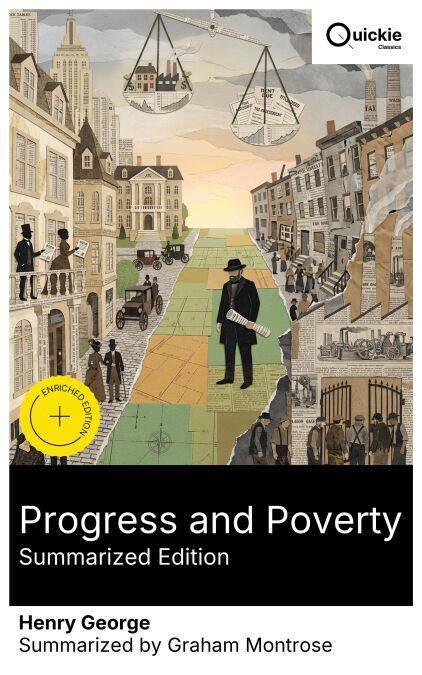
Progress and Poverty (Summarized Edition) E-BOOK
Enriched edition. Analyzing inequality and poverty's roots with a bold single-tax remedy in a landmark 19th-century critique of political economy
Henry George
E-book | Engels
€ 1,99
+ 1 punten
Eenvoudig bestellen
Veilig betalen


Onmiddellijk geleverd via e-mail
Omschrijving
In Progress and Poverty, Volumes I and II, Henry George tackles the puzzle of rising wealth amid persistent want. In lucid, polemical prose that fuses moral philosophy with political economy, he reworks classical theories of rent, wages, and interest, indicts speculative landholding, and advances the single tax on land values. Set against Gilded Age depressions, the work moves from diagnosis to institutional remedy. George, a self-taught printer and journalist, forged his economics from experience in California's land booms, railroad privilege, and the Long Depression of the 1870s. Observing unemployment amid mechanization and urban squalor, he embraced a natural-rights republicanism hostile to monopoly. His reporting furnished cases; his moral imagination and rigorous deduction supplied the architecture of this reformist treatise. Recommended to economists, historians, urban planners, and engaged citizens, this book provides a disciplined framework for confronting inequality, housing scarcity, and tax design. As both historical document and policy blueprint, it clarifies how public capture of land rents can align growth with justice—making George's argument strikingly contemporary and essential.
Quickie Classics summarizes timeless works with precision, preserving the author's voice and keeping the prose clear, fast, and readable—distilled, never diluted. Enriched Edition extras: Introduction · Synopsis · Historical Context · Brief Analysis · 4 Reflection Q&As · Editorial Footnotes.
Quickie Classics summarizes timeless works with precision, preserving the author's voice and keeping the prose clear, fast, and readable—distilled, never diluted. Enriched Edition extras: Introduction · Synopsis · Historical Context · Brief Analysis · 4 Reflection Q&As · Editorial Footnotes.
Specificaties
Betrokkenen
- Auteur(s):
- Uitgeverij:
Inhoud
- Aantal bladzijden:
- 160
- Taal:
- Engels
Eigenschappen
- Productcode (EAN):
- 8596547880806
- Verschijningsdatum:
- 9/01/2026
- Uitvoering:
- E-book
- Beveiligd met:
- Digital watermarking
- Formaat:
- ePub


Alleen bij Standaard Boekhandel
+ 1 punten op je klantenkaart van Standaard Boekhandel
CADEAU

AANGERADEN


Beoordelingen
We publiceren alleen reviews die voldoen aan de voorwaarden voor reviews. Bekijk onze voorwaarden voor reviews.