


- Afhalen na 1 uur in een winkel met voorraad
- Gratis thuislevering in België vanaf € 30
- Ruim aanbod met 7 miljoen producten
- Afhalen na 1 uur in een winkel met voorraad
- Gratis thuislevering in België vanaf € 30
- Ruim aanbod met 7 miljoen producten





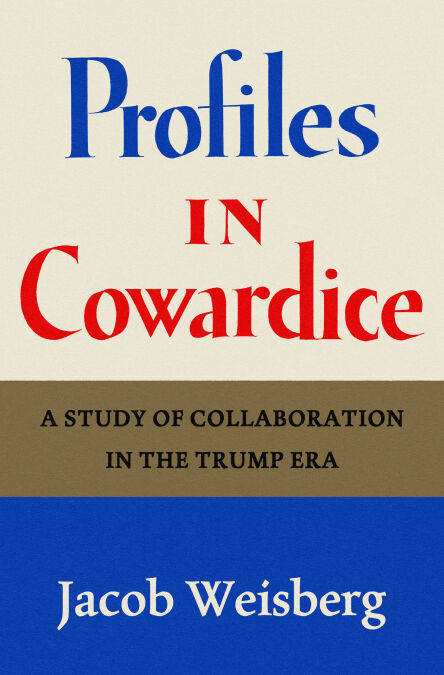
Profiles in Cowardice E-BOOK
A Study of Collaboration in the Trump Era
Jacob Weisberg
E-book | Engels
€ 19,64
+ 19 punten
Uitvoering
Omschrijving
A devastating reckoning with the people and institutions whose failure to stand up to Trump’s brazen grab for authoritarian power has been particularly shocking and consequential
It may be scant solace, but history will be particularly harsh to a subset of Trump enablers with a few key things in common: They have money and power. They represent intuitions that are central in determining whether America remains a free, functioning democracy or not. And they absolutely know better. History starts now.
In Profiles in Cowardice, Jacob Weisberg has written one of the first defining books of the Trump Era—how this pitch-black political moment happened, why so few resisted, and what it reveals about the character of American leadership.
Jeff Bezos, Amazon, and Big Tech. Stephen Schwarzman, Blackstone, and Wall Street. Brad Karp, Paul, Weiss, and Big Law. Mitch McConnell and the United States Senate. Eight individuals in all, together forming an entwined network of power in America, and a new way to understand how authoritarianism can take root in an open society—not by overthrowing institutions, but by bending and bullying them into submission.
The book is a masterful study of the ways people create rationalizations to justify basic human instincts such as greed, vanity and fear—above all fear. Fear is the great enemy of democracy, and the book illuminates how it operates, how it disguises itself, and how it spreads. The book is timeless: its profiles are case studies, but they are also mirrors. They ask readers to examine their own instincts, their own silences, their own thresholds for action. This is not a morality tale with easy villains. It is an attempt to describe the moral mechanics of democratic failure. By studying that failure up close, we may better understand what courage truly requires—and why it is so rarely summoned when it matters most.
It may be scant solace, but history will be particularly harsh to a subset of Trump enablers with a few key things in common: They have money and power. They represent intuitions that are central in determining whether America remains a free, functioning democracy or not. And they absolutely know better. History starts now.
In Profiles in Cowardice, Jacob Weisberg has written one of the first defining books of the Trump Era—how this pitch-black political moment happened, why so few resisted, and what it reveals about the character of American leadership.
Jeff Bezos, Amazon, and Big Tech. Stephen Schwarzman, Blackstone, and Wall Street. Brad Karp, Paul, Weiss, and Big Law. Mitch McConnell and the United States Senate. Eight individuals in all, together forming an entwined network of power in America, and a new way to understand how authoritarianism can take root in an open society—not by overthrowing institutions, but by bending and bullying them into submission.
The book is a masterful study of the ways people create rationalizations to justify basic human instincts such as greed, vanity and fear—above all fear. Fear is the great enemy of democracy, and the book illuminates how it operates, how it disguises itself, and how it spreads. The book is timeless: its profiles are case studies, but they are also mirrors. They ask readers to examine their own instincts, their own silences, their own thresholds for action. This is not a morality tale with easy villains. It is an attempt to describe the moral mechanics of democratic failure. By studying that failure up close, we may better understand what courage truly requires—and why it is so rarely summoned when it matters most.
Specificaties
Betrokkenen
- Auteur(s):
- Uitgeverij:
Inhoud
- Aantal bladzijden:
- 288
- Taal:
- Engels
Eigenschappen
- Productcode (EAN):
- 9798217062607
- Verschijningsdatum:
- 14/09/2026
- Uitvoering:
- E-book
- Beveiligd met:
- Adobe DRM
- Formaat:
- ePub



Alleen bij Standaard Boekhandel
+ 19 punten op je klantenkaart van Standaard Boekhandel
Cadeau

AANGERADEN


Beoordelingen
We publiceren alleen reviews die voldoen aan de voorwaarden voor reviews. Bekijk onze voorwaarden voor reviews.