



Bedankt voor het vertrouwen het afgelopen jaar! Om jou te bedanken bieden we GRATIS verzending (in België) aan op alles gedurende de hele maand januari.
- Afhalen na 1 uur in een winkel met voorraad
- In januari gratis thuislevering in België
- Ruim aanbod met 7 miljoen producten
Bedankt voor het vertrouwen het afgelopen jaar! Om jou te bedanken bieden we GRATIS verzending (in België) aan op alles gedurende de hele maand januari.
- Afhalen na 1 uur in een winkel met voorraad
- In januari gratis thuislevering in België
- Ruim aanbod met 7 miljoen producten





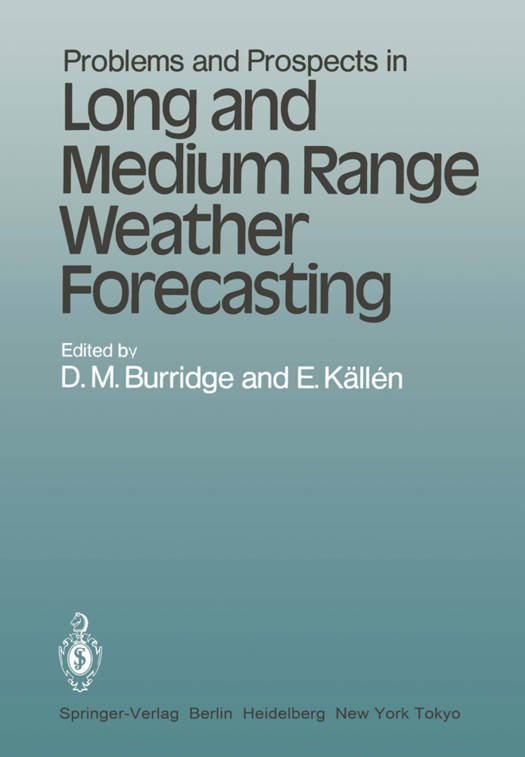
Problems and Prospects in Long and Medium Range Weather Forecasting
€ 153,95
+ 307 punten
Omschrijving
Forecasting the weather for the long and medium range is a difficult and scientifically challenging problem. Since the first operational weather prediction by numerical methods was carried out (on the BESK computer in Stockholm, Sweden, 1954) . there has been an ever accelerating development in computer technology. Hand in hand has followed a tremendous increase in the complexity of the atmospheric models used for weather prediction. The ability of these models to predict future states of the atmosphere has also increased rapidly, both due to model development and due to more accurate and plentiful observations of the atmosphere to define the initial . state for model integrations. It may however be argued on theoretical grounds that even if we have an almost perfect model with almost perfect initial data, we will never be able to make an accurate weather prediction more than a few weeks ahead. This is due to the inherent instability of the atmosphere and work in this field was pioneered by E. Lorenz. It is generally referred to as atmospheric predict- ability and in the opening chapter of this book Professor Lorenz gives us an overview of the problem of atmospheric predictability. The contributions to this book were originally presented at the 1981 ECMWF Seminar (ECMWF - European Centre for Medium Range Weather Forecasts) which was held at ECMWF in Reading, England, in September 1981.
Specificaties
Betrokkenen
- Uitgeverij:
Inhoud
- Aantal bladzijden:
- 274
- Taal:
- Engels
- Reeks:
Eigenschappen
- Productcode (EAN):
- 9783540128274
- Verschijningsdatum:
- 1/12/1983
- Uitvoering:
- Paperback
- Formaat:
- Trade paperback (VS)
- Afmetingen:
- 170 mm x 244 mm
- Gewicht:
- 467 g

Alleen bij Standaard Boekhandel
+ 307 punten op je klantenkaart van Standaard Boekhandel
SOLDEN


Beoordelingen
We publiceren alleen reviews die voldoen aan de voorwaarden voor reviews. Bekijk onze voorwaarden voor reviews.