


- Afhalen na 1 uur in een winkel met voorraad
- Gratis thuislevering in België vanaf € 30
- Ruim aanbod met 7 miljoen producten
- Afhalen na 1 uur in een winkel met voorraad
- Gratis thuislevering in België vanaf € 30
- Ruim aanbod met 7 miljoen producten





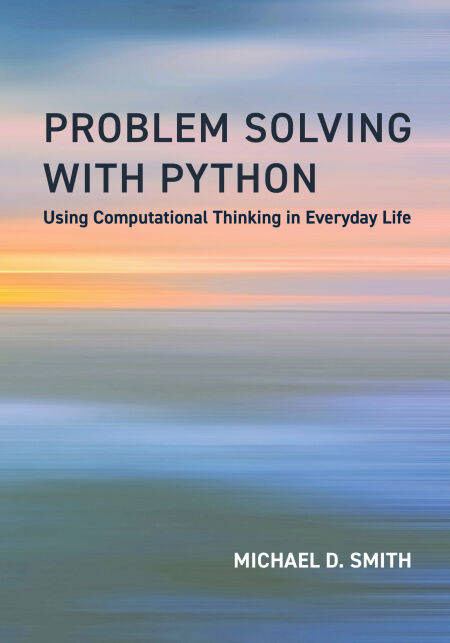
Problem Solving with Python E-BOOK
Using Computational Thinking in Everyday Life
Michael D. Smith
E-book | Engels
€ 64,07
+ 64 punten
Uitvoering
Omschrijving
An innovative new way to teach computational thinking and problem solving that makes programming accessible to anyone.
Problem solving with computation has become a basic literacy required of modern life, but the traditional way we teach students to code doesn’t work for everyone. This innovative textbook provides a highly engaging alternative approach. Problem Solving with Python is a hands-on introduction to computational thinking, useful computer science concepts, and the art of computer programming, where skills and ideas are introduced in service of solving an interesting problem.
Each chapter begins with an ambiguous problem description drawn from everyday life that resolves with a piece of working code. Gradually progressing in difficulty, the book’s three-act structure charts a clear developmental path from novice to skilled programmer. Michael Smith first presents the basics of programming through repeated application of a worklist algorithm, allowing the reader to become comfortable in problem decomposition and fundamentals before attempting more complicated algorithms and approaches. He then shows how to solve real-world problems using the power of abstraction, algorithms, and the right data structures. Finally, the exercises in the book’s last act fully transition the reader from programmer to problem solver. Based on the author's popular class at Harvard, this accessible textbook builds conceptual understanding through practical skills development to enable anyone to master the what and how of computational thinking.
Prioritizes the development of computational thinking Does not assume students are intrinsically motivated to learn programming Emphasizes active learning through real-world problems and case studies Is suitable for students and self-learners from all backgrounds Includes coverage of data representation, arithmetic and logical operations, algorithms, networks, computability, operating systems and compilers, memory systems, and security Offers extensive ancillary resources
Problem solving with computation has become a basic literacy required of modern life, but the traditional way we teach students to code doesn’t work for everyone. This innovative textbook provides a highly engaging alternative approach. Problem Solving with Python is a hands-on introduction to computational thinking, useful computer science concepts, and the art of computer programming, where skills and ideas are introduced in service of solving an interesting problem.
Each chapter begins with an ambiguous problem description drawn from everyday life that resolves with a piece of working code. Gradually progressing in difficulty, the book’s three-act structure charts a clear developmental path from novice to skilled programmer. Michael Smith first presents the basics of programming through repeated application of a worklist algorithm, allowing the reader to become comfortable in problem decomposition and fundamentals before attempting more complicated algorithms and approaches. He then shows how to solve real-world problems using the power of abstraction, algorithms, and the right data structures. Finally, the exercises in the book’s last act fully transition the reader from programmer to problem solver. Based on the author's popular class at Harvard, this accessible textbook builds conceptual understanding through practical skills development to enable anyone to master the what and how of computational thinking.
Prioritizes the development of computational thinking Does not assume students are intrinsically motivated to learn programming Emphasizes active learning through real-world problems and case studies Is suitable for students and self-learners from all backgrounds Includes coverage of data representation, arithmetic and logical operations, algorithms, networks, computability, operating systems and compilers, memory systems, and security Offers extensive ancillary resources
Specificaties
Betrokkenen
- Auteur(s):
- Illustrator(s):
- Uitgeverij:
Inhoud
- Aantal bladzijden:
- 432
- Taal:
- Engels
Eigenschappen
- Productcode (EAN):
- 9780262383677
- Verschijningsdatum:
- 19/01/2026
- Uitvoering:
- E-book
- Beveiligd met:
- Adobe DRM
- Formaat:
- ePub


Alleen bij Standaard Boekhandel
+ 64 punten op je klantenkaart van Standaard Boekhandel
Cadeau

AANGERADEN


Beoordelingen
We publiceren alleen reviews die voldoen aan de voorwaarden voor reviews. Bekijk onze voorwaarden voor reviews.