


- Afhalen na 1 uur in een winkel met voorraad
- Gratis thuislevering in België vanaf € 30
- Ruim aanbod met 7 miljoen producten
- Afhalen na 1 uur in een winkel met voorraad
- Gratis thuislevering in België vanaf € 30
- Ruim aanbod met 7 miljoen producten





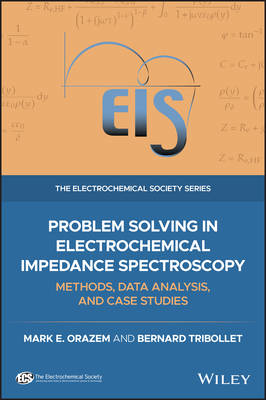
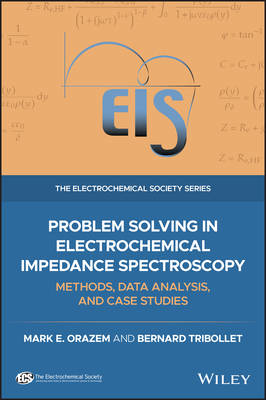
Problem Solving in Electrochemical Impedance Spectroscopy
Methods, Data Analysis, and Case Studies
Mark E Orazem, Bernard Tribollet
€ 163,95
+ 327 punten
Omschrijving
Current books on electrochemical impedance spectroscopy describe the science but do not provide detailed guidance on how to solve the problems that arise in the field nor how to interpret data. This book provides step ]by ]step solutions to problems typical of electrochemical impedance spectroscopy, and a systematic method to interpret selected impedance spectra. Problems are drawn, in part, from the second edition of M. E. Orazem and B. Tribollet, Electrochemical Impedance Spectroscopy, 2017, with additional problems presented to broaden the scope of the work. The book may be used on its own or as an enhancement to the material covered in Electrochemical Impedance Spectroscopy, 2nd edition. It is divided into three parts: Problems and Solutions: Problem statements are presented, followed by a detailed worked solution. Application to Experimental Data: Each chapter in this section follows the step ]by ]step analysis of sample impedance data. The data sets have been selected to highlight unique concepts. The data are reproduced in the book and available on a companion website. Reference Material: Includes tables of data and formulae needed to solve problems, and sample computer code. This book is intended for use as a professional reference and as a resource for training new scientists and engineers on application of impedance spectroscopy to a broad range of systems, such as corrosion, biomedical devices, semiconductors and solid ]state devices, sensors, batteries, fuel cells, electrochemical capacitors, dielectric measurements, coatings, electrochromic materials, analytical chemistry, and imaging.
Specificaties
Betrokkenen
- Auteur(s):
- Uitgeverij:
Inhoud
- Aantal bladzijden:
- 600
- Taal:
- Engels
- Reeks:
Eigenschappen
- Productcode (EAN):
- 9781119779216
- Verschijningsdatum:
- 17/08/2026
- Uitvoering:
- Hardcover
- Formaat:
- Genaaid


Alleen bij Standaard Boekhandel
+ 327 punten op je klantenkaart van Standaard Boekhandel
Cadeau

AANGERADEN


Beoordelingen
We publiceren alleen reviews die voldoen aan de voorwaarden voor reviews. Bekijk onze voorwaarden voor reviews.