


- Afhalen na 1 uur in een winkel met voorraad
- Gratis thuislevering in België vanaf € 30
- Ruim aanbod met 7 miljoen producten
- Afhalen na 1 uur in een winkel met voorraad
- Gratis thuislevering in België vanaf € 30
- Ruim aanbod met 7 miljoen producten





€ 36,45
+ 72 punten
Uitvoering
Omschrijving
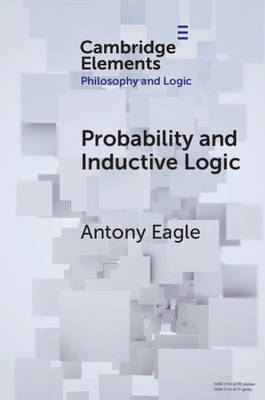
Reasoning from inconclusive evidence, or 'induction', is central to science and any applications we make of it. For that reason alone it demands the attention of philosophers of science. This element explores the prospects of using probability theory to provide an inductive logic: a framework for representing evidential support. Constraints on the ideal evaluation of hypotheses suggest that the overall standing of a hypothesis is represented by its probability in light of the total evidence, and incremental support, or confirmation, indicated by the hypothesis having a higher probability conditional on some evidence than it does unconditionally. This proposal is shown to have the capacity to reconstruct many canons of the scientific method and inductive inference. Along the way, significant objections are discussed, such as the challenge of inductive scepticism, and the objection that the probabilistic approach makes evidential support arbitrary.
Specificaties
Betrokkenen
- Auteur(s):
- Uitgeverij:
Inhoud
- Aantal bladzijden:
- 102
- Taal:
- Engels
- Reeks:
Eigenschappen
- Productcode (EAN):
- 9781009210195
- Verschijningsdatum:
- 30/01/2025
- Uitvoering:
- Paperback
- Formaat:
- Trade paperback (VS)
- Afmetingen:
- 152 mm x 229 mm
- Gewicht:
- 145 g


Alleen bij Standaard Boekhandel
+ 72 punten op je klantenkaart van Standaard Boekhandel
Cadeau

AANGERADEN


Beoordelingen
We publiceren alleen reviews die voldoen aan de voorwaarden voor reviews. Bekijk onze voorwaarden voor reviews.