



Je cadeautjes zeker op tijd in huis hebben voor de feestdagen? Kom langs in onze winkels en vind het perfecte geschenk!
- Afhalen na 1 uur in een winkel met voorraad
- Gratis thuislevering in België vanaf € 30
- Ruim aanbod met 7 miljoen producten
Je cadeautjes zeker op tijd in huis hebben voor de feestdagen? Kom langs in onze winkels en vind het perfecte geschenk!
- Afhalen na 1 uur in een winkel met voorraad
- Gratis thuislevering in België vanaf € 30
- Ruim aanbod met 7 miljoen producten





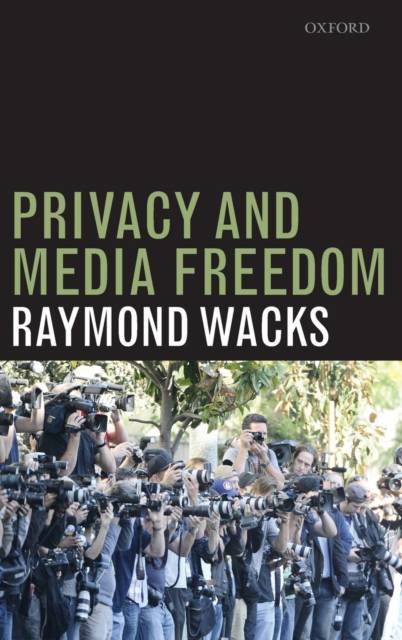
Omschrijving
Freedom of expression is a fundamental right at the heart of any democratic society. It is, however, inevitably restricted by other important values, including the right to privacy: the control individuals exercise over their sensitive personal information. The English law, since the enactment of the Human Rights Act 1998, has undergone a tectonic shift in its recognition of this right protected by Article 8 of the European Convention on Human Rights (ECHR) which the Act assimilated into domestic law. The new civil wrong, 'misuse of private information, ' now affords greater protection to an individual's 'private and family life, home and correspondence.' The press is, of course, no longer the principal purveyor of news and information. The Internet offers abundant opportunities for the dissemination of news and opinions, including the publication of intimate, private facts. Social media, blogs, and other online sites are accessible to all. Indeed, the fragility of privacy online has led some to conclude that it is no longer capable of legal protection. This book examines the right of privacy from a legal, philosophical, and social perspective, tracing its genesis in the United States, through the development of the law of confidence, and its recent recognition by the Human Rights Act. The English courts have boldly sought to offer refuge from an increasingly intrusive media. Recent years have witnessed a deluge of civil suits by celebrities seeking to salvage what remains of their privacy. An extensive body of case law has appeared in many common law jurisdictions over the last decade, which shows no sign of abating. The Leveson Inquiry into the culture, practices, and ethics of the press, sparked by the hacking of telephones by newspapers, revealed a greater degree of media intrusion than was previously evident. Its conclusions and recommendations, particularly regarding the regulation of the media, are examined, as well as the various remedies available to victims of intrusion and unsolicited publicity. The law is locked in a struggle to reconcile privacy and free speech, in the face of relentless advances in technology. The manner in which courts in various jurisdictions have attempted to resolve this conflict is critically investigated, and the prospects for the protection of privacy are considered.
Specificaties
Betrokkenen
- Auteur(s):
- Uitgeverij:
Inhoud
- Aantal bladzijden:
- 308
- Taal:
- Engels
Eigenschappen
- Productcode (EAN):
- 9780199668656
- Verschijningsdatum:
- 24/07/2013
- Uitvoering:
- Hardcover
- Formaat:
- Genaaid
- Afmetingen:
- 157 mm x 234 mm
- Gewicht:
- 612 g


Alleen bij Standaard Boekhandel
+ 547 punten op je klantenkaart van Standaard Boekhandel
CADEAU


Beoordelingen
We publiceren alleen reviews die voldoen aan de voorwaarden voor reviews. Bekijk onze voorwaarden voor reviews.