



Bedankt voor het vertrouwen het afgelopen jaar! Om jou te bedanken bieden we GRATIS verzending (in België) aan op alles gedurende de hele maand januari.
- Afhalen na 1 uur in een winkel met voorraad
- In januari gratis thuislevering in België
- Ruim aanbod met 7 miljoen producten
Bedankt voor het vertrouwen het afgelopen jaar! Om jou te bedanken bieden we GRATIS verzending (in België) aan op alles gedurende de hele maand januari.
- Afhalen na 1 uur in een winkel met voorraad
- In januari gratis thuislevering in België
- Ruim aanbod met 7 miljoen producten





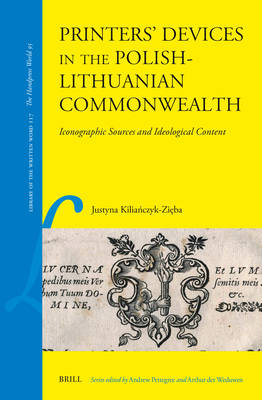
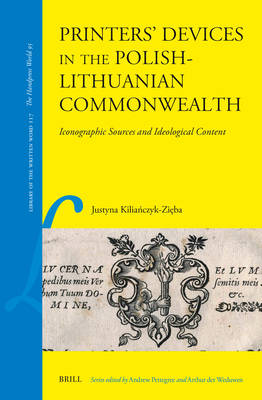
Printers' Devices in the Polish-Lithuanian Commonwealth
Iconographic Sources and Ideological Content
Justyna Kiliańczyk-Zięba
€ 254,95
+ 509 punten
Omschrijving
This book discusses the printers' devices used in Poland-Lithuania in the fifteenth and sixteenth centuries. The compositions that served to identify the products of individual printers are explored here as previously unacknowledged research material for cultural studies: they allow for the reconstruction of the mentality of contemporary printers as well as their co-workers and reading public.
The book investigates relationships within early modern intellectual communities and shows that the textual and visual discourses of the printers' devices were pan-European, reflecting the networked communities of European centres of learning and commerce. It documents the broad range of the output of Polish-Lithuanian presses as well and is therefore also a study of book culture in a multinational and multilingual state, whose inheritance is poorly recognised internationally.
The book investigates relationships within early modern intellectual communities and shows that the textual and visual discourses of the printers' devices were pan-European, reflecting the networked communities of European centres of learning and commerce. It documents the broad range of the output of Polish-Lithuanian presses as well and is therefore also a study of book culture in a multinational and multilingual state, whose inheritance is poorly recognised internationally.
Specificaties
Betrokkenen
- Auteur(s):
- Uitgeverij:
Inhoud
- Aantal bladzijden:
- 300
- Taal:
- Engels
- Reeks:
- Reeksnummer:
- nr. 117
Eigenschappen
- Productcode (EAN):
- 9789004679597
- Verschijningsdatum:
- 4/04/2024
- Uitvoering:
- Hardcover
- Formaat:
- Genaaid
- Afmetingen:
- 160 mm x 242 mm
- Gewicht:
- 680 g


Alleen bij Standaard Boekhandel
+ 509 punten op je klantenkaart van Standaard Boekhandel
SOLDEN


Beoordelingen
We publiceren alleen reviews die voldoen aan de voorwaarden voor reviews. Bekijk onze voorwaarden voor reviews.