


- Afhalen na 1 uur in een winkel met voorraad
- Gratis thuislevering in België vanaf € 30
- Ruim aanbod met 7 miljoen producten
- Afhalen na 1 uur in een winkel met voorraad
- Gratis thuislevering in België vanaf € 30
- Ruim aanbod met 7 miljoen producten





€ 34,49
+ 34 punten
Omschrijving
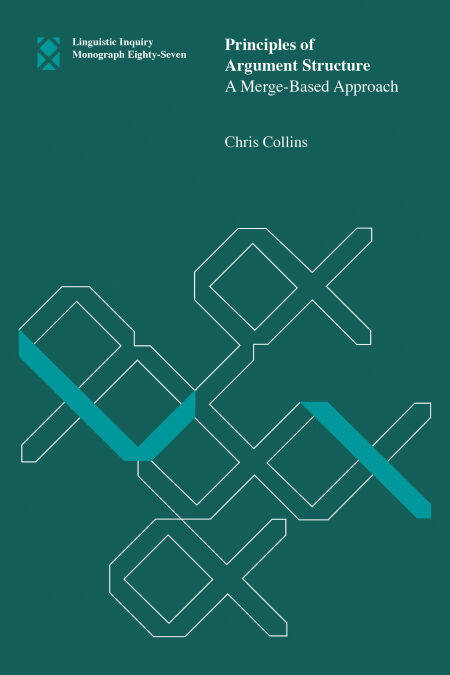
A new theory of argument structure, based on the syntactic operation Merge and presented through an in-depth analysis of properties of the English passive construction.
In Principles of Argument Structure, Chris Collins investigates principles of argument structure in minimalist syntax through an in-depth analysis of properties of the English passive construction. He formulates a new theory of argument structure based on the only structure-building operation in minimalist syntax, Merge, which puts together two syntactic objects to form a larger one. This new theory should give rise to detailed cross-linguistic work on the syntactic and semantic properties of implicit arguments.
Collins presents an update and defense of his influential 2005 theory of the passive, including a completely original theory of implicit arguments. He makes a direct empirical argument for the Theta-Criterion against various claims that it should be eliminated. He also discusses the conception of voice in syntactic theory, arguing that VoiceP does not introduce external arguments, a position otherwise widely accepted in the field. He shows how the ”smuggling” approach to the passive extends naturally to the dative alternation accounting for a number of striking c-command asymmetries. He compares syntactic and semantic approaches to argument structure, outlining conceptual problems with adopting formal semantics as the basis for a theory of argument structure.
The book will be of interest not only to syntacticians and semanticists, but also to typologists investigating the cross-linguistic properties of the passive, psycholinguists and computer scientists working on natural language understanding, and philosophers thinking about the issue of “implicit content.” It includes an appendix that provides common-sense guidelines for doing syntactic research using internet data.
In Principles of Argument Structure, Chris Collins investigates principles of argument structure in minimalist syntax through an in-depth analysis of properties of the English passive construction. He formulates a new theory of argument structure based on the only structure-building operation in minimalist syntax, Merge, which puts together two syntactic objects to form a larger one. This new theory should give rise to detailed cross-linguistic work on the syntactic and semantic properties of implicit arguments.
Collins presents an update and defense of his influential 2005 theory of the passive, including a completely original theory of implicit arguments. He makes a direct empirical argument for the Theta-Criterion against various claims that it should be eliminated. He also discusses the conception of voice in syntactic theory, arguing that VoiceP does not introduce external arguments, a position otherwise widely accepted in the field. He shows how the ”smuggling” approach to the passive extends naturally to the dative alternation accounting for a number of striking c-command asymmetries. He compares syntactic and semantic approaches to argument structure, outlining conceptual problems with adopting formal semantics as the basis for a theory of argument structure.
The book will be of interest not only to syntacticians and semanticists, but also to typologists investigating the cross-linguistic properties of the passive, psycholinguists and computer scientists working on natural language understanding, and philosophers thinking about the issue of “implicit content.” It includes an appendix that provides common-sense guidelines for doing syntactic research using internet data.
Specificaties
Betrokkenen
- Auteur(s):
- Uitgeverij:
Inhoud
- Aantal bladzijden:
- 210
- Taal:
- Engels
- Reeks:
Eigenschappen
- Productcode (EAN):
- 9780262379120
- Verschijningsdatum:
- 16/09/2024
- Uitvoering:
- E-book
- Beveiligd met:
- Adobe DRM
- Formaat:
- ePub


Alleen bij Standaard Boekhandel
+ 34 punten op je klantenkaart van Standaard Boekhandel
Cadeau

AANGERADEN


Beoordelingen
We publiceren alleen reviews die voldoen aan de voorwaarden voor reviews. Bekijk onze voorwaarden voor reviews.