


- Afhalen na 1 uur in een winkel met voorraad
- Gratis thuislevering in België vanaf € 30
- Ruim aanbod met 7 miljoen producten
- Afhalen na 1 uur in een winkel met voorraad
- Gratis thuislevering in België vanaf € 30
- Ruim aanbod met 7 miljoen producten





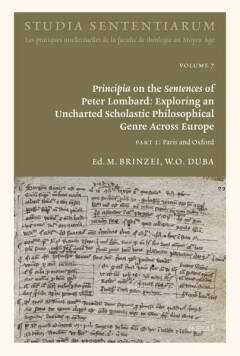
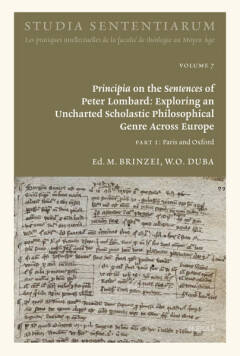
Principia on the Sentences of Peter Lombard
Monica Brinzei
€ 127,20
+ 254 punten
Omschrijving
Principia were an obligatory step on the medieval university path to becoming a master of theology. As inaugural lectures on the four books of the Sentences of Peter Lombard, they provided the first opportunity for a scholastic to defend a philosophical-theological worldview. These lectures were also a way for the theologian, now a sententiarius, to present himself and to make a name for himself, initially by delivering in a speech an introduction to the course and by debating with his fellows. The present book takes a collective approach to offer a survey of the evolution of the genre, mapping the dissemination of this exercise during the fourteenth and fifteenth centuries across Europe. As an academic exercise, principia bridge ideas, texts, authors, and institutions across time. Exploring the corpus of surviving principia illuminates the philosophical creativity cultivated in the faculties of theology. The papers in these volumes thus not only discuss the structural aspects of principia, but also treat the philosophical and theological ideas defended and attacked during the principial debates and the topics and imagery used in the speeches. The various chapters delve into the surviving material in a common attempt, firstly, to assemble pieces of evidence from Paris and Oxford into an image portraying how, when, and by whom the principia were performed in the first European universities. The second part illustrates the spread of the genre to the new faculties of theology in Central Europe and Italy, with case studies from Bologna, Cracow, Florence, Heidelberg, Prague, and Vienna, highlighting the pan-European diffusion of the practice.
Specificaties
Betrokkenen
- Auteur(s):
- Uitgeverij:
Inhoud
- Aantal bladzijden:
- 1204
- Taal:
- Frans
- Reeks:
- Reeksnummer:
- nr. 7
Eigenschappen
- Productcode (EAN):
- 9782503612089
- Verschijningsdatum:
- 7/08/2024
- Uitvoering:
- Hardcover
- Formaat:
- Genaaid
- Afmetingen:
- 165 mm x 244 mm
- Gewicht:
- 2277 g


Alleen bij Standaard Boekhandel
+ 254 punten op je klantenkaart van Standaard Boekhandel
Cadeau

AANGERADEN


Beoordelingen
We publiceren alleen reviews die voldoen aan de voorwaarden voor reviews. Bekijk onze voorwaarden voor reviews.