


- Afhalen na 1 uur in een winkel met voorraad
- Gratis thuislevering in België vanaf € 30
- Ruim aanbod met 7 miljoen producten
- Afhalen na 1 uur in een winkel met voorraad
- Gratis thuislevering in België vanaf € 30
- Ruim aanbod met 7 miljoen producten





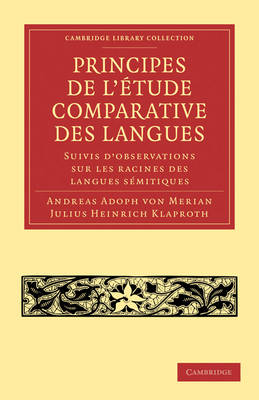
Principes de l'Étude Comparative Des Langues
Suivis d'Observations Sur Les Racines Des Langues Sémitiques
Andreas Adoph Von Merian, Julius Heinrich Klaproth
€ 61,45
+ 122 punten
Omschrijving
This wide-ranging comparative analysis of languages was one of the earliest products of the nineteenth century's burgeoning interest in philology. Its author was the French diplomat Baron de Merian, a contemporary of Wihelm von Humboldt and precursor of Franz Bopp and August Schleicher (also published in this series). Published shortly after Merian's death in 1828, this meticulous study is the result of twelve years of painstaking work. Merian concisely maps out the languages of the world, and attempts to trace all major dialects back to a common root. He ably demonstrates his competence as a philologist, illustrating his argument through extensive charts and tables, and does not shy away from topics such as Basque and Native American vocabulary which still pose problems for linguists today. Though many of Merian's theories have since been disproved, his pioneering work deserves its place in the history of linguistics.
Specificaties
Betrokkenen
- Auteur(s):
- Uitgeverij:
Inhoud
- Aantal bladzijden:
- 252
- Taal:
- Frans
- Reeks:
Eigenschappen
- Productcode (EAN):
- 9781108006859
- Verschijningsdatum:
- 21/01/2010
- Uitvoering:
- Paperback
- Formaat:
- Trade paperback (VS)
- Afmetingen:
- 140 mm x 216 mm
- Gewicht:
- 322 g


Alleen bij Standaard Boekhandel
+ 122 punten op je klantenkaart van Standaard Boekhandel
Cadeau

AANGERADEN


Beoordelingen
We publiceren alleen reviews die voldoen aan de voorwaarden voor reviews. Bekijk onze voorwaarden voor reviews.