


- Afhalen na 1 uur in een winkel met voorraad
- Gratis thuislevering in België vanaf € 30
- Ruim aanbod met 7 miljoen producten
- Afhalen na 1 uur in een winkel met voorraad
- Gratis thuislevering in België vanaf € 30
- Ruim aanbod met 7 miljoen producten





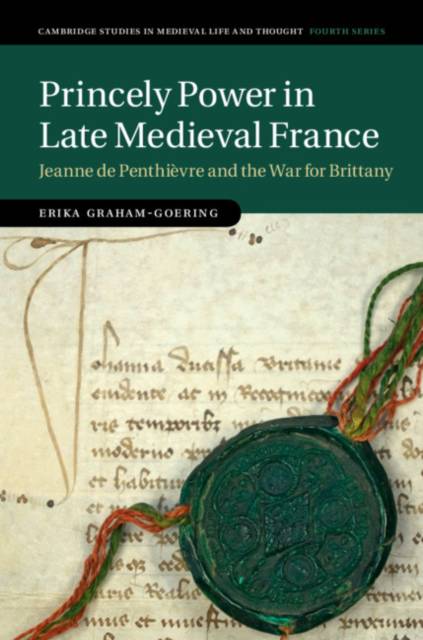
Princely Power in Late Medieval France
Jeanne de Penthièvre and the War for Brittany
Erika Graham-Goering
€ 125,95
+ 251 punten
Uitvoering
Omschrijving
Jeanne de Penthièvre (c.1326-1384), duchess of Brittany, was an active and determined ruler who maintained her claim to the duchy throughout a war of succession and even after her eventual defeat. This in-depth study examines Jeanne's administrative and legal records to explore her co-rule with her husband, the social implications of ducal authority, and her strategies of legitimization in the face of conflict. While studies of medieval political authority often privilege royal, male, and exclusive models of power, Erika Graham-Goering reveals how there were multiple coexisting standards of princely action, and it was the navigation of these expectations that was more important to the successful exercise of power than adhering to any single approach. Cutting across categories of hierarchy, gender, and collaborative rule, this perspective sheds light on women's rulership as a crucial component in the power structures of the early Hundred Years' War, and demonstrates that lordship retained salience as a political category even in a period of growing monarchical authority.
Specificaties
Betrokkenen
- Auteur(s):
- Uitgeverij:
Inhoud
- Aantal bladzijden:
- 302
- Taal:
- Engels
- Reeks:
Eigenschappen
- Productcode (EAN):
- 9781108489096
- Verschijningsdatum:
- 16/04/2020
- Uitvoering:
- Hardcover
- Formaat:
- Genaaid
- Afmetingen:
- 165 mm x 231 mm
- Gewicht:
- 589 g


Alleen bij Standaard Boekhandel
+ 251 punten op je klantenkaart van Standaard Boekhandel
Cadeau

AANGERADEN


Beoordelingen
We publiceren alleen reviews die voldoen aan de voorwaarden voor reviews. Bekijk onze voorwaarden voor reviews.