



Er zijn problemen bij het activeren van e-books. Daardoor kan het langer duren voor je aangekochte e-books beschikbaar zijn. Je ontvangt automatisch bericht van zodra dat het geval is.
- Afhalen na 1 uur in een winkel met voorraad
- In januari gratis thuislevering in België
- Ruim aanbod met 7 miljoen producten
Er zijn problemen bij het activeren van e-books. Daardoor kan het langer duren voor je aangekochte e-books beschikbaar zijn. Je ontvangt automatisch bericht van zodra dat het geval is.
- Afhalen na 1 uur in een winkel met voorraad
- In januari gratis thuislevering in België
- Ruim aanbod met 7 miljoen producten




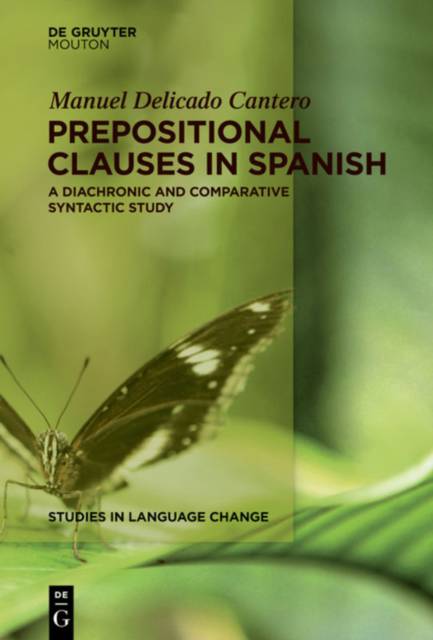
Prepositional Clauses in Spanish
A Diachronic and Comparative Syntactic Study
Manuel Delicado Cantero
€ 168,45
Omschrijving
This book presents an analysis of Spanish prepositional clauses () - complement and adverbial clauses. The goal is to examine the syntax and evolution of those clauses and their components in Spanish, contrasting them with other European languages.
Prepositional argument and adjunct clauses are grammatical in present-day Spanish. However, Medieval Spanish only attests the latter; the former were not frequent until the 16th/17th centuries. Both types are examined in their syntactic evolution and properties, including clausal nominality, argumenthood, nature of prepositions, and optionality.
Latin and Portuguese, French, and Italian - both in their present-day and past forms - are studied and compared to Spanish. Likewise, several Germanic languages are surveyed. These languages show variable grammatical degrees of . The comparison reveals aspects which challenge the commonly accepted conclusions about the clausal patterns of each language.
This study offers a novel approach to the analysis of Spanish prepositional clauses by looking at its properties and formation not only from within but also in contrast with other languages. It argues for cross-linguistically valid categories and explanations in order to comprehend the properties of human language.
Prepositional argument and adjunct clauses are grammatical in present-day Spanish. However, Medieval Spanish only attests the latter; the former were not frequent until the 16th/17th centuries. Both types are examined in their syntactic evolution and properties, including clausal nominality, argumenthood, nature of prepositions, and optionality.
Latin and Portuguese, French, and Italian - both in their present-day and past forms - are studied and compared to Spanish. Likewise, several Germanic languages are surveyed. These languages show variable grammatical degrees of . The comparison reveals aspects which challenge the commonly accepted conclusions about the clausal patterns of each language.
This study offers a novel approach to the analysis of Spanish prepositional clauses by looking at its properties and formation not only from within but also in contrast with other languages. It argues for cross-linguistically valid categories and explanations in order to comprehend the properties of human language.
Specificaties
Betrokkenen
- Auteur(s):
- Uitgeverij:
Inhoud
- Aantal bladzijden:
- 326
- Taal:
- Engels
- Reeks:
- Reeksnummer:
- nr. 12
Eigenschappen
- Productcode (EAN):
- 9781614510611
- Verschijningsdatum:
- 17/07/2013
- Uitvoering:
- Hardcover
- Formaat:
- Genaaid
- Afmetingen:
- 163 mm x 234 mm
- Gewicht:
- 589 g


Alleen bij Standaard Boekhandel
Cadeau

AANGERADEN


Beoordelingen
We publiceren alleen reviews die voldoen aan de voorwaarden voor reviews. Bekijk onze voorwaarden voor reviews.