


- Afhalen na 1 uur in een winkel met voorraad
- Gratis thuislevering in België vanaf € 30
- Ruim aanbod met 7 miljoen producten
- Afhalen na 1 uur in een winkel met voorraad
- Gratis thuislevering in België vanaf € 30
- Ruim aanbod met 7 miljoen producten





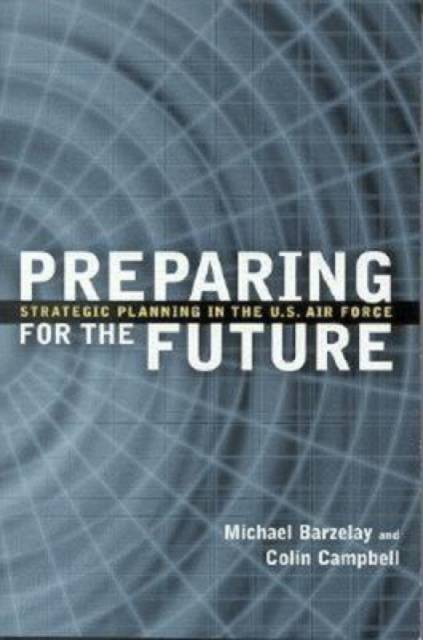
Preparing for the Future
Strategic Planning in the U.S. Air Force
Michael Barzelay, Colin H Campbell
Paperback | Engels
€ 50,95
+ 101 punten
Uitvoering
Eenvoudig bestellen
Veilig betalen


Gratis thuislevering vanaf € 30 (via bpost)
Gratis levering in je Standaard Boekhandel
Omschrijving
While the Clinton Administration and federal agencies were busy making government cost less and work better in the near-term, the United States Air Force was regularly visualizing the competencies needed to assure the organization's long-term effectiveness. As a result of steady efforts to prepare for the future conducted under successive secretaries and chiefs of staff, the Air Force has developed a distinctive approach to strategic planning. This approach is fundamentally concerned with ensuring that the organization's future capabilities support effective performance of future tasks. Such tasks are shaped by ever-changing policy objectives and circumstances of implementation. After eight years, the Air Force has not only successfully refined its distinctive approach to strategic planning, but has also leveraged change in programmatic decisions, human resource management, and operational technologies. This study provides an inside look at how the Air Force came to formulate and declare its ""strategic intent"" for developing the organization's capabilities over a timeline of more than twenty years. Air Force strategic intent is not a plan, but a shared commitment to strengthening specific core competencies and critical future capabilities. Michael Barzelay and Colin Campbell reveal how one of the nation's most significant public organizations has reassessed its own strategic intent. Drawing lessons from the Air Force experience, this book provides a significant contribution to public management research on innovation and executive leadership. One key lesson is that preparing for the future is a responsibility that organizations can discharge effectively if they combine insights with practical knowledge of executive leadership and the dynamics of policy change. Preparing for the Future provides a fresh argument about innovation and leadership in public management, while breaking new ground in the analysis of managerial practices, such as strategic v
Specificaties
Betrokkenen
- Auteur(s):
- Uitgeverij:
Inhoud
- Aantal bladzijden:
- 274
- Taal:
- Engels
Eigenschappen
- Productcode (EAN):
- 9780815708452
- Verschijningsdatum:
- 31/07/2003
- Uitvoering:
- Paperback
- Formaat:
- Trade paperback (VS)
- Afmetingen:
- 152 mm x 226 mm
- Gewicht:
- 385 g



Alleen bij Standaard Boekhandel
+ 101 punten op je klantenkaart van Standaard Boekhandel
CADEAU

AANGERADEN


Beoordelingen
We publiceren alleen reviews die voldoen aan de voorwaarden voor reviews. Bekijk onze voorwaarden voor reviews.