


- Afhalen na 1 uur in een winkel met voorraad
- Gratis thuislevering in België vanaf € 30
- Ruim aanbod met 7 miljoen producten
- Afhalen na 1 uur in een winkel met voorraad
- Gratis thuislevering in België vanaf € 30
- Ruim aanbod met 7 miljoen producten





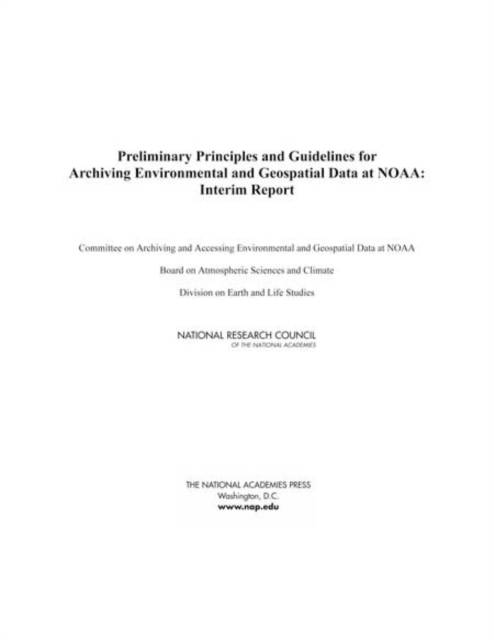
Preliminary Principles and Guidelines for Archiving Environmental and Geospatial Data at Noaa
Interim Report
National Research Council, Division on Earth and Life Studies, Board on Atmospheric Sciences and Climate, Committee on Archiving and Accessing Environmental and Geospatia
Paperback | Engels
€ 51,95
+ 103 punten
Eenvoudig bestellen
Veilig betalen


Gratis thuislevering vanaf € 30 (via bpost)
Gratis levering in je Standaard Boekhandel
Omschrijving
The National Oceanic and Atmospheric Administration (NOAA) collects and manages a wide range of environmental and geospatial data to fulfill its mission requirements--data that stretch from the surface of the sun to the core of the earth, and affect every aspect of society. With limited resources and enormous growth in data volumes, NOAA asked the National Academies for advice on how to archive and provide access to these data. This book offers preliminary principles and guidelines that NOAA and its partners can use to begin planning specific archiving strategies for the data streams they currently collect. For example, the book concludes that the decision to archive environmental or geospatial data should be driven by its current or future value to society, and that funding for environmental and geospatial measurements should include sufficient resources to archive and provide access to the data these efforts generate. The preliminary principles and guidelines proposed in this book will be refined and expanded to cover data access issues in a final book expected to be released in 2007.
Specificaties
Betrokkenen
- Auteur(s):
- Uitgeverij:
Inhoud
- Aantal bladzijden:
- 38
- Taal:
- Engels
Eigenschappen
- Productcode (EAN):
- 9780309102278
- Verschijningsdatum:
- 15/06/2006
- Uitvoering:
- Paperback
- Formaat:
- Trade paperback (VS)
- Afmetingen:
- 216 mm x 279 mm
- Gewicht:
- 130 g


Alleen bij Standaard Boekhandel
+ 103 punten op je klantenkaart van Standaard Boekhandel
CADEAU

AANGERADEN


Beoordelingen
We publiceren alleen reviews die voldoen aan de voorwaarden voor reviews. Bekijk onze voorwaarden voor reviews.