


- Afhalen na 1 uur in een winkel met voorraad
- Gratis thuislevering in België vanaf € 30
- Ruim aanbod met 7 miljoen producten
- Afhalen na 1 uur in een winkel met voorraad
- Gratis thuislevering in België vanaf € 30
- Ruim aanbod met 7 miljoen producten





Omschrijving
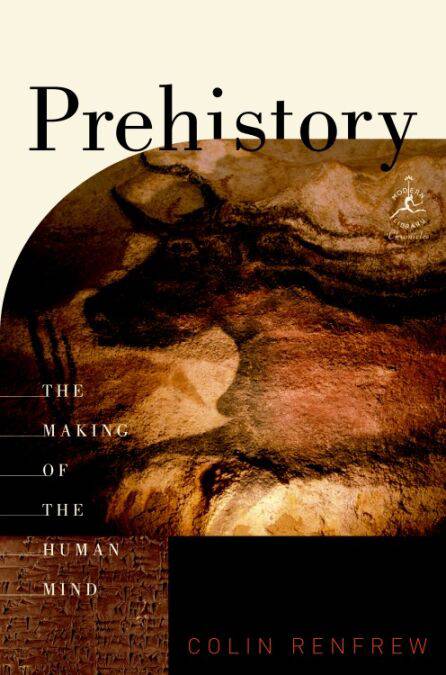
In Prehistory, the award-winning archaeologist and renowned scholar Colin Renfrew covers human existence before the advent of written records–which is to say, the overwhelming majority of our time here on earth. But Renfrew also opens up to discussion, and even debate, the term “prehistory” itself, giving an incisive, concise, and lively survey of the past, and how scholars and scientists labor to bring it to light.
Renfrew begins by looking at prehistory as a discipline, particularly how developments of the past century and a half–advances in archaeology and geology; Darwin’s ideas of evolution; discoveries of artifacts and fossil evidence of our human ancestors; and even more enlightened museum and collection curatorship–have fueled continuous growth in our knowledge of prehistory. He details how breakthroughs such as radiocarbon dating and DNA analysis have helped us to define humankind’s past–how things have changed–much more clearly than was possible just a half century ago. Answers for why things have changed, however, continue to elude us, so Renfrew discusses some of the issues and challenges past and present that confront the study of prehistory and its investigators.
In the book’s second part, Renfrew shifts the narrative focus, offering a summary of human prehistory from early hominids to the rise of literate civilization that is refreshingly free from conventional wisdom and grand “unified” theories. The author’s own case studies encompass a vast geographical and chronological range–the Orkney Islands, the Balkans, the Indus Valley, Peru, Ireland, and China–and help to explain the formation and development of agriculture and centralized societies. He concludes with a fascinating chapter on early writing systems, “From Prehistory to History.”
In this invaluable, brief account of human development prior to the last four millennia, Colin Renfrew delivers a meticulously researched and passionately argued chronicle about our life on earth, and our ongoing quest to understand it.
Renfrew begins by looking at prehistory as a discipline, particularly how developments of the past century and a half–advances in archaeology and geology; Darwin’s ideas of evolution; discoveries of artifacts and fossil evidence of our human ancestors; and even more enlightened museum and collection curatorship–have fueled continuous growth in our knowledge of prehistory. He details how breakthroughs such as radiocarbon dating and DNA analysis have helped us to define humankind’s past–how things have changed–much more clearly than was possible just a half century ago. Answers for why things have changed, however, continue to elude us, so Renfrew discusses some of the issues and challenges past and present that confront the study of prehistory and its investigators.
In the book’s second part, Renfrew shifts the narrative focus, offering a summary of human prehistory from early hominids to the rise of literate civilization that is refreshingly free from conventional wisdom and grand “unified” theories. The author’s own case studies encompass a vast geographical and chronological range–the Orkney Islands, the Balkans, the Indus Valley, Peru, Ireland, and China–and help to explain the formation and development of agriculture and centralized societies. He concludes with a fascinating chapter on early writing systems, “From Prehistory to History.”
In this invaluable, brief account of human development prior to the last four millennia, Colin Renfrew delivers a meticulously researched and passionately argued chronicle about our life on earth, and our ongoing quest to understand it.
Specificaties
Betrokkenen
- Auteur(s):
- Uitgeverij:
Inhoud
- Aantal bladzijden:
- 240
- Taal:
- Engels
- Reeks:
Eigenschappen
- Productcode (EAN):
- 9781588368089
- Verschijningsdatum:
- 18/08/2008
- Uitvoering:
- E-book
- Beveiligd met:
- Adobe DRM
- Formaat:
- ePub


Alleen bij Standaard Boekhandel
+ 11 punten op je klantenkaart van Standaard Boekhandel
Cadeau

AANGERADEN


Beoordelingen
We publiceren alleen reviews die voldoen aan de voorwaarden voor reviews. Bekijk onze voorwaarden voor reviews.