


- Afhalen na 1 uur in een winkel met voorraad
- Gratis thuislevering in België vanaf € 30
- Ruim aanbod met 7 miljoen producten
- Afhalen na 1 uur in een winkel met voorraad
- Gratis thuislevering in België vanaf € 30
- Ruim aanbod met 7 miljoen producten





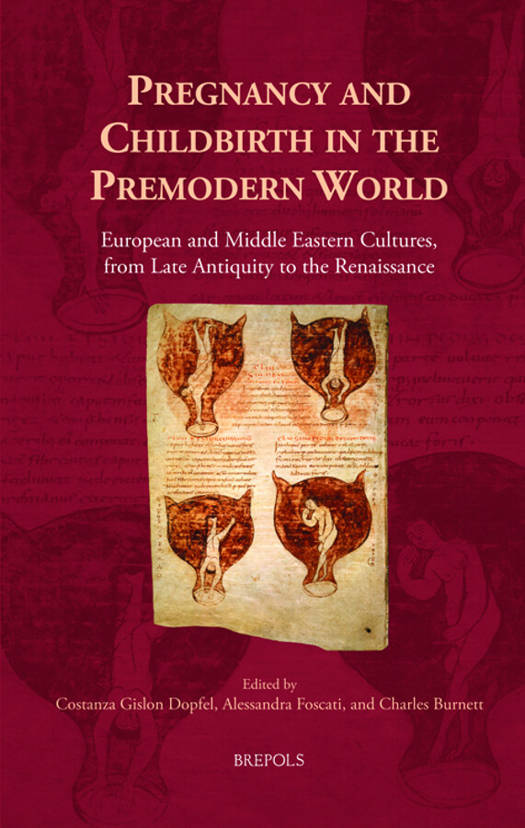
Pregnancy and Childbirth in the Premodern World
European and Middle Eastern Cultures, from Late Antiquity to the Renaissance
Costanza Gislon Dopfel
€ 116,60
+ 233 punten
Omschrijving
This volume of contributions from international scholars offers a cross-cultural and multi-period analysis of pregnancy and childbirth traditions in Western and Middle Eastern cultures. The studies focus on the ideas, practices, and visual representations surrounding pregnancy and birth-giving from Late Antiquity to the Renaissance and offer the reader the possibility of observing the perception, representation, and theoretic paradigm of these events in a wide range of cultural contexts. The collection fits within multiple traditions of specialized scholarship, yet its scope suggests a geographically global approach and a new, multicultural methodology that encompasses a wide range of practices, historical periods, and topics. On one hand, it participates in the well-established medical, historical, and iconographic discourse on childbirth and family that has enticed much interest over the last two decades; on the other, its unique thematic structure includes cultures and periods previously ignored in similar collections of essays. The articles span from Northern Europe to the Mediterranean, the Middle East, and India, and connect the experience of childbirth to the exchanges of knowledge, religious beliefs, and social practices. With its variety of topics and specializations, the volume encourages a global comparative approach to the cultural narrative surrounding the activities and attitudes connected to conception and birth, paying particular attention to material culture, religion, history, and iconography, as well as to the exchange and dispersion of medical knowledge.
Specificaties
Betrokkenen
- Auteur(s):
- Uitgeverij:
Inhoud
- Aantal bladzijden:
- 381
- Taal:
- Engels
- Reeks:
- Reeksnummer:
- nr. 36
Eigenschappen
- Productcode (EAN):
- 9782503580555
- Verschijningsdatum:
- 30/04/2019
- Uitvoering:
- Hardcover
- Formaat:
- Genaaid
- Afmetingen:
- 157 mm x 239 mm
- Gewicht:
- 748 g


Alleen bij Standaard Boekhandel
+ 233 punten op je klantenkaart van Standaard Boekhandel
Cadeau

AANGERADEN


Beoordelingen
We publiceren alleen reviews die voldoen aan de voorwaarden voor reviews. Bekijk onze voorwaarden voor reviews.