


- Afhalen na 1 uur in een winkel met voorraad
- Gratis thuislevering in België vanaf € 30
- Ruim aanbod met 7 miljoen producten
- Afhalen na 1 uur in een winkel met voorraad
- Gratis thuislevering in België vanaf € 30
- Ruim aanbod met 7 miljoen producten





Omschrijving
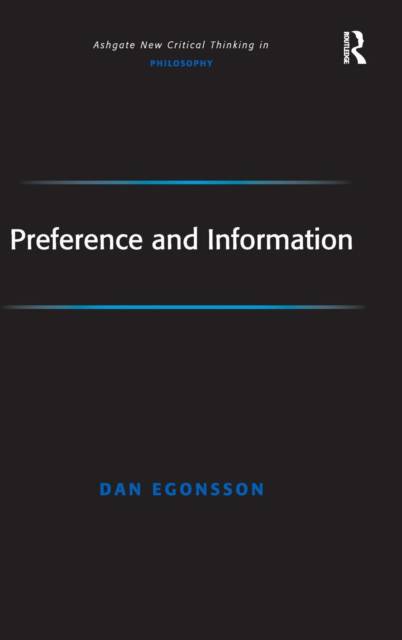
Is it important to our quality of life that the preferences we satisfy are rational and well-informed? Standard preferentialist theories allege that a person's preferences and their satisfaction are the correct measure of well-being. In preference-sensitive theories, preferences are important but do not count for everything. This raises the question of whether we ought to make demands on these preferences. In this book Egonsson presents a critical analysis of the 'Full Information Account of the Good', which claims that only the satisfaction of rational and fully informed preferences has value for a person. The problems he deals with include: how is an information requirement to be formulated and shaped? Is it possible to design a requirement that is both neutral to the agent's epistemic situation and reasonable? Is the requirement reasonable? Does it make sense to claim that some are better off if we satisfy the preferences they would have had in some merely hypothetical circumstances? This is an important new book on preference rationality which will be of great interest to academics and students of ethics, quality of life, and rationality.
Specificaties
Betrokkenen
- Auteur(s):
- Uitgeverij:
Inhoud
- Aantal bladzijden:
- 176
- Taal:
- Engels
- Reeks:
Eigenschappen
- Productcode (EAN):
- 9780754657255
- Verschijningsdatum:
- 28/03/2007
- Uitvoering:
- Hardcover
- Afmetingen:
- 156 mm x 234 mm
- Gewicht:
- 426 g


Alleen bij Standaard Boekhandel
+ 580 punten op je klantenkaart van Standaard Boekhandel
AANGERADEN


Beoordelingen
We publiceren alleen reviews die voldoen aan de voorwaarden voor reviews. Bekijk onze voorwaarden voor reviews.