


- Afhalen na 1 uur in een winkel met voorraad
- Gratis thuislevering in België vanaf € 30
- Ruim aanbod met 7 miljoen producten
- Afhalen na 1 uur in een winkel met voorraad
- Gratis thuislevering in België vanaf € 30
- Ruim aanbod met 7 miljoen producten





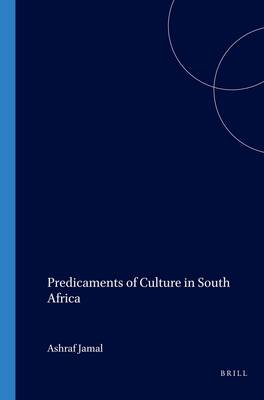
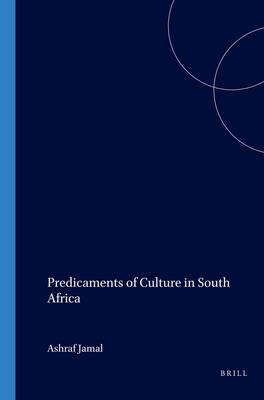
Predicaments of Culture in South Africa
Ashraf Jamal
€ 83,95
+ 167 punten
Omschrijving
Symptomatic of an emergent shift away from prescriptive and deterministic accounts of change in South Africa, Predicaments of culture in South Africa posits an open-ended and speculative approach to the question and agency of culture. The key question, posed by Justice Albie Sachs of the Constitutional Court of South Africa, 'what does it mean to be a South African?' is shifted from its familiar ontological and epistemological habitat, 'what is identity?', the better to embrace its ethical and political rider, 'what are identities for?', and its more pragmatic possibility, 'what can identities do?' These qualifications - Bhabha's - form the building blocks that skew and enrich existing presumptions about South Africa's history, its present moment and its future.
Jamal challenges and qualifies the conflicting and contiguous drives of fatalism, positivism and relativism, which are the dominant claimants upon the South African cultural imaginary. It is this critical non-positionality that forms the distinctive trait of an inquiry which, in eschewing allegiance and closure, opens up the debate about what it means to be South African and the role of culture therein.
'In hindsight, and with the hither side of the future before us', Jamal's driving assumption is that 'world society is advancing towards yet another age of ignorance;
an age beyond suspicion and irony, in which thought, whether self-critical or not, is no longer the agent of reason'. Jamal calls for an urgent reappraisal of the absence of love - of lovelessness - which he sees as the infected root of South Africa's inability to create a positively affirmative cultural imaginary.
Jamal challenges and qualifies the conflicting and contiguous drives of fatalism, positivism and relativism, which are the dominant claimants upon the South African cultural imaginary. It is this critical non-positionality that forms the distinctive trait of an inquiry which, in eschewing allegiance and closure, opens up the debate about what it means to be South African and the role of culture therein.
'In hindsight, and with the hither side of the future before us', Jamal's driving assumption is that 'world society is advancing towards yet another age of ignorance;
an age beyond suspicion and irony, in which thought, whether self-critical or not, is no longer the agent of reason'. Jamal calls for an urgent reappraisal of the absence of love - of lovelessness - which he sees as the infected root of South Africa's inability to create a positively affirmative cultural imaginary.
Specificaties
Betrokkenen
- Auteur(s):
- Uitgeverij:
Inhoud
- Aantal bladzijden:
- 193
- Taal:
- Engels
- Reeks:
- Reeksnummer:
- nr. 11
Eigenschappen
- Productcode (EAN):
- 9781868882854
- Verschijningsdatum:
- 1/01/2006
- Uitvoering:
- Paperback
- Formaat:
- Trade paperback (VS)
- Gewicht:
- 307 g


Alleen bij Standaard Boekhandel
+ 167 punten op je klantenkaart van Standaard Boekhandel
Cadeau

AANGERADEN


Beoordelingen
We publiceren alleen reviews die voldoen aan de voorwaarden voor reviews. Bekijk onze voorwaarden voor reviews.