


- Afhalen na 1 uur in een winkel met voorraad
- Gratis thuislevering in België vanaf € 30
- Ruim aanbod met 7 miljoen producten
- Afhalen na 1 uur in een winkel met voorraad
- Gratis thuislevering in België vanaf € 30
- Ruim aanbod met 7 miljoen producten





€ 13,99
+ 27 punten
Omschrijving
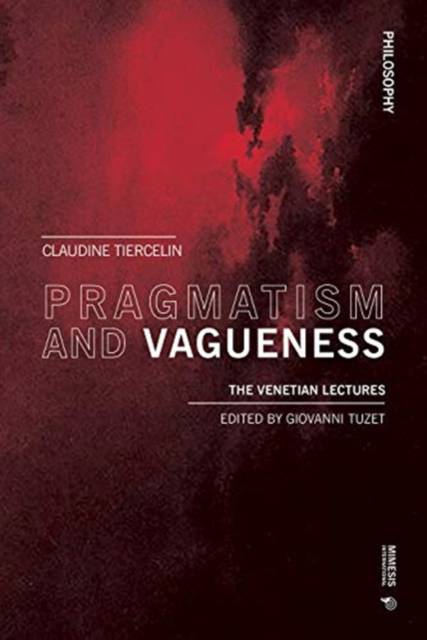
For most early pragmatists, including the founder C.S. Peirce and L. Wittgenstein, vagueness was a real and universal principle and not a mere defect of our knowledge or thought. This volume begins by exploring this pragmatist notion of vagueness and the way it was tied to their basic opposition to various kinds of reductionism and nominalism. It then develops towards an analysis of Peirce's original and wide views on vagueness, as seen through the angles of logic, semiotics, epistemology and metaphysics. In the final part of this book, the reader is presented with a case for the contemporary relevance of such a realistic pragmaticism for the ongoing debate on semantic, epistemic and ontic vagueness.
Specificaties
Betrokkenen
- Auteur(s):
- Uitgeverij:
Inhoud
- Aantal bladzijden:
- 86
- Taal:
- Engels
- Reeks:
Eigenschappen
- Productcode (EAN):
- 9788869771767
- Verschijningsdatum:
- 7/03/2019
- Uitvoering:
- Paperback
- Formaat:
- Trade paperback (VS)
- Afmetingen:
- 137 mm x 208 mm
- Gewicht:
- 113 g


Alleen bij Standaard Boekhandel
+ 27 punten op je klantenkaart van Standaard Boekhandel
Cadeau

AANGERADEN


Beoordelingen
We publiceren alleen reviews die voldoen aan de voorwaarden voor reviews. Bekijk onze voorwaarden voor reviews.