


- Afhalen na 1 uur in een winkel met voorraad
- Gratis thuislevering in België vanaf € 30
- Ruim aanbod met 7 miljoen producten
- Afhalen na 1 uur in een winkel met voorraad
- Gratis thuislevering in België vanaf € 30
- Ruim aanbod met 7 miljoen producten





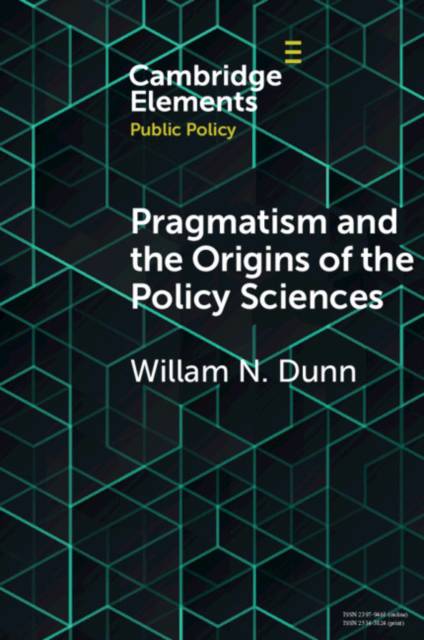
Pragmatism and the Origins of the Policy Sciences
Rediscovering Lasswell and the Chicago School
William N Dunn
€ 36,45
+ 72 punten
Omschrijving
This Element presents an examination of the origins of the policy sciences in the School of Pragmatism at the University of Chicago in the period 1915-38. Harold D. Lasswell, the principal creator of the policy sciences, based much of his work on the perspectives of public policy of John Dewey and other pragmatists at Chicago. Characteristics of the policy sciences include orientations that are normative, policy-relevant, contextual, and multi-disciplinary. These orientations originate in pragmatist principles of the unity of knowledge and action and functionalist explanations of action by reference to values. These principles are central to the future development of the policy sciences.
Specificaties
Betrokkenen
- Auteur(s):
- Uitgeverij:
Inhoud
- Aantal bladzijden:
- 82
- Taal:
- Engels
- Reeks:
Eigenschappen
- Productcode (EAN):
- 9781108730518
- Verschijningsdatum:
- 14/03/2019
- Uitvoering:
- Paperback
- Formaat:
- Trade paperback (VS)
- Afmetingen:
- 152 mm x 229 mm
- Gewicht:
- 122 g


Alleen bij Standaard Boekhandel
+ 72 punten op je klantenkaart van Standaard Boekhandel
Cadeau

AANGERADEN


Beoordelingen
We publiceren alleen reviews die voldoen aan de voorwaarden voor reviews. Bekijk onze voorwaarden voor reviews.