


- Afhalen na 1 uur in een winkel met voorraad
- Gratis thuislevering in België vanaf € 30
- Ruim aanbod met 7 miljoen producten
- Afhalen na 1 uur in een winkel met voorraad
- Gratis thuislevering in België vanaf € 30
- Ruim aanbod met 7 miljoen producten





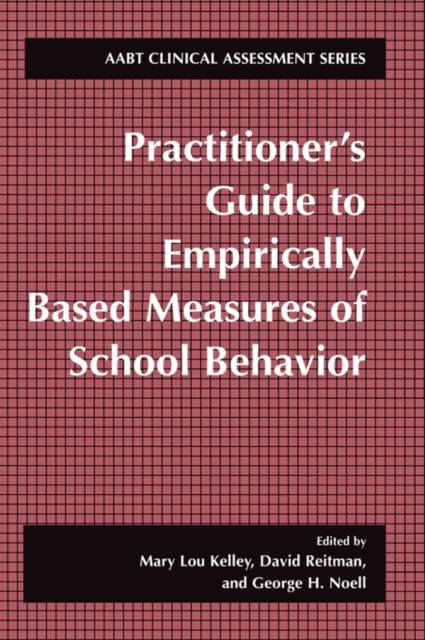
Practitioner's Guide to Empirically Based Measures of School Behavior
€ 167,95
+ 335 punten
Omschrijving
Children's display of unacceptable behavior in the school setting, school violence, academic underachievement, and school failure represent a cluster of problems that touches all aspects of society. Children with learning and behavior problems are much more likely to be un- ployed, exhibit significant emotional and behavior disorders in adulthood, as well as become incarcerated. For example, by adolescence, children with Attention Deficit Hyperactivity D- order are more likely to be retained a grade, drop out of school, have contact with the law, or fair worse along a number of dimensions than their unaffected siblings (Barkely, 1998). Identification, assessment, and treatment of children with externalizing behavior problems and learningdisabilities is critical to optimizing development and prevention of relatively - tractable behavioral and emotional problems in adulthood. For example, poor interpersonal problem solving and social skills excesses and deficits are strongly associated with poor o- come in adolescence and adulthood. The school is where children learn essential academic, social, and impulse control skills that allow them to function effectively in later years. School is where problems in these areas can be most easily identified and addressed. The purpose of this book is to provide an overview of assessment practices for evaluating children's externalizing behavior problems exhibited in the school environment. Reviews of approximately 100 assessment devices for measuring children's externalizing problems are included. Instruments include structured interviews, rating scales, and observational methods.
Specificaties
Betrokkenen
- Uitgeverij:
Inhoud
- Aantal bladzijden:
- 231
- Taal:
- Engels
- Reeks:
Eigenschappen
- Productcode (EAN):
- 9780306472671
- Verschijningsdatum:
- 31/12/2002
- Uitvoering:
- Hardcover
- Formaat:
- Genaaid
- Afmetingen:
- 185 mm x 259 mm
- Gewicht:
- 657 g


Alleen bij Standaard Boekhandel
+ 335 punten op je klantenkaart van Standaard Boekhandel
AANGERADEN


Beoordelingen
We publiceren alleen reviews die voldoen aan de voorwaarden voor reviews. Bekijk onze voorwaarden voor reviews.