


- Afhalen na 1 uur in een winkel met voorraad
- Gratis thuislevering in België vanaf € 30
- Ruim aanbod met 7 miljoen producten
- Afhalen na 1 uur in een winkel met voorraad
- Gratis thuislevering in België vanaf € 30
- Ruim aanbod met 7 miljoen producten





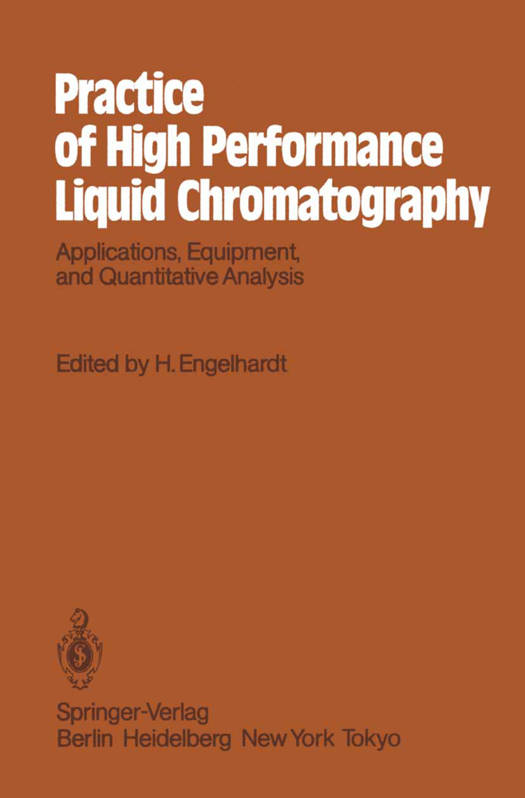
Practice of High Performance Liquid Chromatography
Applications, Equipment and Quantitative Analysis
€ 83,95
+ 167 punten
Omschrijving
During its short 20 year history High Performance Liquid Chro- matography (HPLC) has won itself a firm place amongst the instrumental methods of analysis. HPLC has caused a revolution in biological and pharmaceutical chemistry. Approximately two thirds of the publications on HPLC are concerned with problems from this area of life science. Biotechnology, where it is necessary to isolate substances from complicated mixtures, is likely to give further impetus to the dissemination of modern liquid chromatog- raphy in columns, particularly on the preparative scale. This book presents, by means of examples, the application of HPLC to various fields, as well as fundamental discussions of chromatographic methods. The quality of the analytical result is decisively dependent on the qualities of the equipment employed (by Colin, Guiochon, and Martin). Especially the demands are discussed that are placed on the components of the instrument including those for data acquisition and processing. The section on "quantitative analy- sis" (by ABhauer, Ullner) covers besides the principles also the problems of ensuring the quality of the data in detail. The basic problems arising by enlarging the sample size to preparative di- mensions and the requirements put on the aparatus are discussed in the section on "preparative applications" (by Wehrli).
Specificaties
Betrokkenen
- Uitgeverij:
Inhoud
- Aantal bladzijden:
- 464
- Taal:
- Engels
- Reeks:
Eigenschappen
- Productcode (EAN):
- 9783642692277
- Verschijningsdatum:
- 20/11/2013
- Uitvoering:
- Paperback
- Formaat:
- Trade paperback (VS)
- Afmetingen:
- 170 mm x 244 mm
- Gewicht:
- 757 g


Alleen bij Standaard Boekhandel
+ 167 punten op je klantenkaart van Standaard Boekhandel
Wedstrijd


Beoordelingen
We publiceren alleen reviews die voldoen aan de voorwaarden voor reviews. Bekijk onze voorwaarden voor reviews.