


- Afhalen na 1 uur in een winkel met voorraad
- Gratis thuislevering in België vanaf € 30
- Ruim aanbod met 7 miljoen producten
- Afhalen na 1 uur in een winkel met voorraad
- Gratis thuislevering in België vanaf € 30
- Ruim aanbod met 7 miljoen producten





€ 39,42
+ 39 punten
Uitvoering
Omschrijving
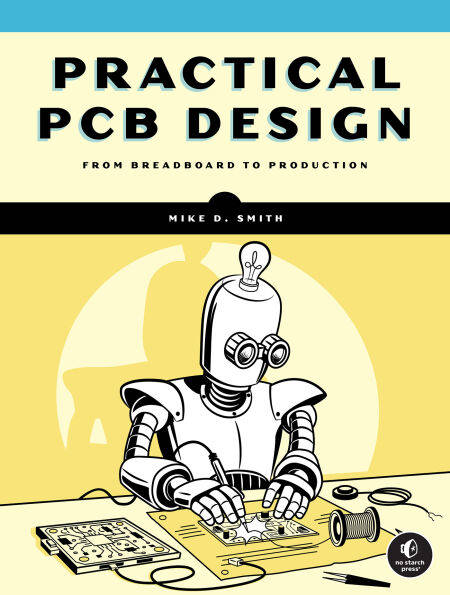
Your circuit works on the breadboard. Now learn the concepts that turn it into a board ready for production.
You've built the circuit. It works on your breadboard. Now what?
For most makers and electronics enthusiasts, that's where the journey ends. Technical reference manuals assume you already know PCB fundamentals. Software tutorials show you which menu to click. Neither one teaches the underlying concepts: what a via is and why you need it, how layers work and why the stackup matters, how a schematic becomes something a manufacturer can actually build.
Practical PCB Design fills that gap. Based on the PCB design course Mike D. Smith has taught at the University of Rhode Island for nearly a decade, this book introduces the concepts, terminology, and design judgment that turn a working prototype into a reliable, production-ready board. Every chapter pairs clear explanation with hands-on lab exercises, so you're designing alongside the reading.
You'll learn how to:
Create schematics and component libraries from scratch Understand PCB layers, stackups, and how material choices affect performance Place components and route traces with intention, not guesswork Set design rules and run checks before anything goes to fabrication Generate output files and work confidently with manufacturers
The material is software-agnostic: whether you use KiCad, Altium, Eagle, or something else, the concepts apply. If you've ever wondered why your designs don't quite work once they leave the breadboard, or felt intimidated by the gap between working circuit and finished product, this book is for you.
You've built the circuit. It works on your breadboard. Now what?
For most makers and electronics enthusiasts, that's where the journey ends. Technical reference manuals assume you already know PCB fundamentals. Software tutorials show you which menu to click. Neither one teaches the underlying concepts: what a via is and why you need it, how layers work and why the stackup matters, how a schematic becomes something a manufacturer can actually build.
Practical PCB Design fills that gap. Based on the PCB design course Mike D. Smith has taught at the University of Rhode Island for nearly a decade, this book introduces the concepts, terminology, and design judgment that turn a working prototype into a reliable, production-ready board. Every chapter pairs clear explanation with hands-on lab exercises, so you're designing alongside the reading.
You'll learn how to:
Create schematics and component libraries from scratch Understand PCB layers, stackups, and how material choices affect performance Place components and route traces with intention, not guesswork Set design rules and run checks before anything goes to fabrication Generate output files and work confidently with manufacturers
The material is software-agnostic: whether you use KiCad, Altium, Eagle, or something else, the concepts apply. If you've ever wondered why your designs don't quite work once they leave the breadboard, or felt intimidated by the gap between working circuit and finished product, this book is for you.
Specificaties
Betrokkenen
- Auteur(s):
- Uitgeverij:
Inhoud
- Aantal bladzijden:
- 280
- Taal:
- Engels
Eigenschappen
- Productcode (EAN):
- 9781718504059
- Verschijningsdatum:
- 4/01/2027
- Uitvoering:
- E-book
- Formaat:
- ePub


Alleen bij Standaard Boekhandel
+ 39 punten op je klantenkaart van Standaard Boekhandel
Cadeau

AANGERADEN


Beoordelingen
We publiceren alleen reviews die voldoen aan de voorwaarden voor reviews. Bekijk onze voorwaarden voor reviews.