


- Afhalen na 1 uur in een winkel met voorraad
- Gratis thuislevering in België vanaf € 30
- Ruim aanbod met 7 miljoen producten
- Afhalen na 1 uur in een winkel met voorraad
- Gratis thuislevering in België vanaf € 30
- Ruim aanbod met 7 miljoen producten





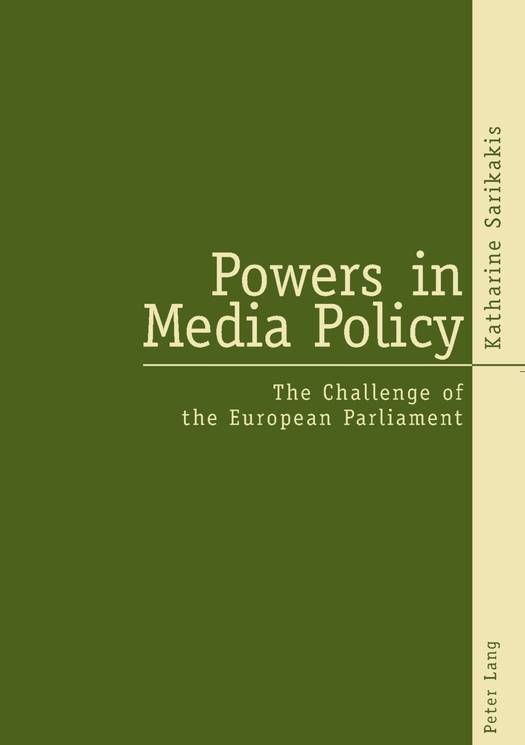
Powers in Media Policy
The Challenge of the European Parliament
Katharine Sarikakis
Paperback | Engels
€ 76,45
+ 152 punten
Omschrijving
Contrary to widespread rhetoric of deregulation, the media are objects of increased global policy. Generators of cultural spheres, within which social consensus is formed, the media are shaped by national and supranational agencies of questionable legitimacy. Policy delineates the form and content of global communications impinging on cultures, discourses and consciousness; yet, citizen representation in processes of policy-making remains fragmentary.
In this insightful study, the author examines the role of the European Parliament, as the only international organisation directly accountable to and elected by citizens, in the formation of media policy. This critical account of supranational representation identifies the structural and ideological dynamics of powers in European media policy. Through detailed examination of major policies, the author demonstrates the conditions under which supranational representation can offer a resisting force to unaccountable global powers, and the ways in which it can contribute to system transformation and defend communication spaces.
In this insightful study, the author examines the role of the European Parliament, as the only international organisation directly accountable to and elected by citizens, in the formation of media policy. This critical account of supranational representation identifies the structural and ideological dynamics of powers in European media policy. Through detailed examination of major policies, the author demonstrates the conditions under which supranational representation can offer a resisting force to unaccountable global powers, and the ways in which it can contribute to system transformation and defend communication spaces.
Specificaties
Betrokkenen
- Auteur(s):
- Uitgeverij:
Inhoud
- Aantal bladzijden:
- 214
- Taal:
- Engels
Eigenschappen
- Productcode (EAN):
- 9783039101467
- Verschijningsdatum:
- 25/02/2004
- Uitvoering:
- Paperback
- Formaat:
- Trade paperback (VS)
- Afmetingen:
- 152 mm x 229 mm
- Gewicht:
- 290 g



Alleen bij Standaard Boekhandel
+ 152 punten op je klantenkaart van Standaard Boekhandel
Cadeau

AANGERADEN


Beoordelingen
We publiceren alleen reviews die voldoen aan de voorwaarden voor reviews. Bekijk onze voorwaarden voor reviews.