


- Afhalen na 1 uur in een winkel met voorraad
- Gratis thuislevering in België vanaf € 30
- Ruim aanbod met 7 miljoen producten
- Afhalen na 1 uur in een winkel met voorraad
- Gratis thuislevering in België vanaf € 30
- Ruim aanbod met 7 miljoen producten





€ 137,80
+ 275 punten
Omschrijving
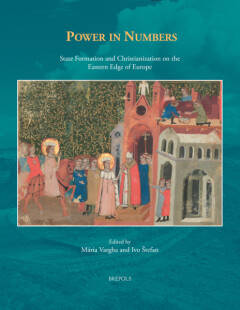
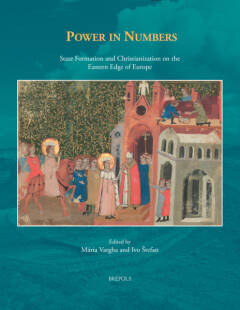
Around the turn of the first millennium, the political and religious landscape of Central Europe began to change dramatically. As the decentralized pagan societies along its borders became Christian, the polity that later became the Holy Roman Empire began to expand significantly according to the principles of the Imperium Christianum - an idea that first originated with Charlemagne, but that was consciously revived by Emperor Otto I and his predecessors as a way of extending power and authority into the Empire's newly converted eastern fringes. This acculturation was effective, and societies began to actively adopt the new ideology and social order on their own initiative. Drawing on material first presented at conferences held in the Department of Archaeology at Charles University, Prague, this volume draws together researchers working on different yet connected events along the Empire's eastern frontier, and the often-overlooked part of society who nevertheless participated in these events, in particular commoners and the rural population. The papers gathered here cover affairs of the early state and church, networks of archaeological and historical heritage, and archaeological, historical, and digital investigations, to offer a blend of both synthetic archaeological and historical overviews and more focused geographical and thematic case studies that explore the role of Christianization in the centralization processes that occurred at the edge of the Ottonian-Salian world. The result is a forward-looking volume that seeks to explore new approaches to historical narratives, in particular by emphasizing the importance of archaeological material in examining early state formation and religious change. Moreover, it is the first synthetic study to directly compare the north-east and south-east peripheries of the later Holy Roman Empire, making it possible to shed new light on these lands at the periphery of Western Christendom.
Specificaties
Betrokkenen
- Auteur(s):
- Uitgeverij:
Inhoud
- Aantal bladzijden:
- 308
- Taal:
- Engels
- Reeks:
- Reeksnummer:
- nr. 4
Eigenschappen
- Productcode (EAN):
- 9782503608617
- Verschijningsdatum:
- 28/10/2024
- Uitvoering:
- Paperback
- Formaat:
- Trade paperback (VS)
- Afmetingen:
- 216 mm x 280 mm
- Gewicht:
- 1723 g


Alleen bij Standaard Boekhandel
+ 275 punten op je klantenkaart van Standaard Boekhandel
CADEAU

AANGERADEN


Beoordelingen
We publiceren alleen reviews die voldoen aan de voorwaarden voor reviews. Bekijk onze voorwaarden voor reviews.