


- Afhalen na 1 uur in een winkel met voorraad
- Gratis thuislevering in België vanaf € 30
- Ruim aanbod met 7 miljoen producten
- Afhalen na 1 uur in een winkel met voorraad
- Gratis thuislevering in België vanaf € 30
- Ruim aanbod met 7 miljoen producten





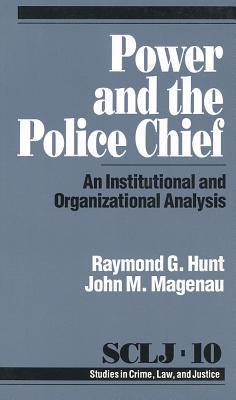
Power and the Police Chief
An Institutional and Organizational Analysis
Raymond G Hunt, John M Magenau
€ 192,45
+ 384 punten
Omschrijving
What does a police chief do, exactly? Little has been written and little is known about today′s police chief. An institutional treatment of American police that focuses on the person and function of the police chief, Power and the Police Chief thoroughly describes the role of the police chief in the contemporary urban setting. The authors utilize institutional theory as a framework for analyzing the police-in-society. From this perspective, they review long-term tendencies toward the rationalist modernization of American police agencies and the ongoing "professionalization," unionization, and bureaucratization of police work today, a process that is resulting in entirely new law-enforcement models. They highlight the internal and external conflicts and power struggles that converted police organizations into tension-filled arenas. At stake in these conflicts, the authors argue, is the fundamental definition of police work. New policing paradigms have emerged that would move it away from rule-based, law-enforcement models toward service alternatives that emphasize the situational imperatives and discretionary essence of police work. Professors, students, and professionals in criminology, sociology, and organizational studies will find Power and the Police Chief a valuable asset.
Specificaties
Betrokkenen
- Auteur(s):
- Uitgeverij:
Inhoud
- Aantal bladzijden:
- 176
- Taal:
- Engels
- Reeks:
- Reeksnummer:
- nr. 10
Eigenschappen
- Productcode (EAN):
- 9780803946552
- Verschijningsdatum:
- 24/03/1993
- Uitvoering:
- Paperback
- Formaat:
- Trade paperback (VS)
- Afmetingen:
- 132 mm x 216 mm
- Gewicht:
- 226 g


Alleen bij Standaard Boekhandel
+ 384 punten op je klantenkaart van Standaard Boekhandel
Cadeau

AANGERADEN


Beoordelingen
We publiceren alleen reviews die voldoen aan de voorwaarden voor reviews. Bekijk onze voorwaarden voor reviews.