


- Afhalen na 1 uur in een winkel met voorraad
- Gratis thuislevering in België vanaf € 30
- Ruim aanbod met 7 miljoen producten
- Afhalen na 1 uur in een winkel met voorraad
- Gratis thuislevering in België vanaf € 30
- Ruim aanbod met 7 miljoen producten





€ 195,45
+ 390 punten
Omschrijving
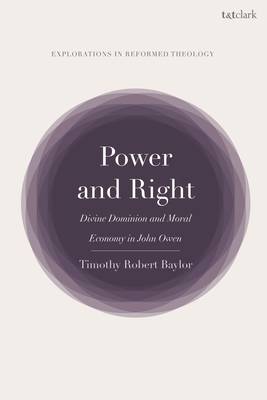
In this compelling work, Baylor draws on the works of John Owen to address critiques of a Reformed theology of God's power and right. Modern outlooks on the world often encourage individuals to think of themselves as free and self-possessed sovereigns, rather than as subjects responsible to some higher authority. Christian responses to this have rightly sought to re-assert the creature's dependence upon God, often focusing criticism on modernity's possessive moral logic, and its disenchanted view of the world. However, Protestant theology is frequently caught in the crossfire, because many argue that the disenchantment of the modern world is driven by a Protestant vision of God's rule as absolute and arbitrary.
This rigorous study shows that Reformed theology has the resources to answer these criticisms and offer a compelling account of God's rule. Baylor turns to Owen's theology of divine "dominion", an attribute that sought to integrate reflection on God's power and justice. By tracing Owen's richly textured vision of the creature's relation to God, Baylor shows that Reformed theology sought to condition our notions of God's power by the forms of the creature's dependence upon God within God's moral economy. In doing so, this book offers a nuanced account of God's relation to creatures, and a powerful rebuttal to contemporary critics that depict Reformed visions of God's power as arbitrary and tyrannical.Specificaties
Betrokkenen
- Auteur(s):
- Uitgeverij:
Inhoud
- Aantal bladzijden:
- 224
- Taal:
- Engels
- Reeks:
Eigenschappen
- Productcode (EAN):
- 9780567714121
- Verschijningsdatum:
- 19/02/2026
- Uitvoering:
- Hardcover
- Formaat:
- Genaaid
- Afmetingen:
- 156 mm x 234 mm
- Gewicht:
- 485 g


Alleen bij Standaard Boekhandel
+ 390 punten op je klantenkaart van Standaard Boekhandel
Cadeau

AANGERADEN


Beoordelingen
We publiceren alleen reviews die voldoen aan de voorwaarden voor reviews. Bekijk onze voorwaarden voor reviews.