


- Afhalen na 1 uur in een winkel met voorraad
- Gratis thuislevering in België vanaf € 30
- Ruim aanbod met 7 miljoen producten
- Afhalen na 1 uur in een winkel met voorraad
- Gratis thuislevering in België vanaf € 30
- Ruim aanbod met 7 miljoen producten





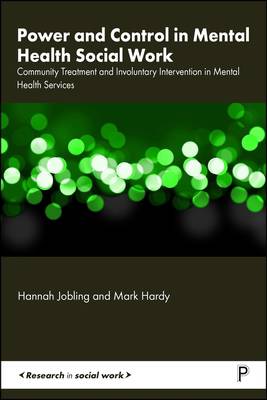
Power and Control in Mental Health Social Work
Community Care and Involuntary Intervention
Hannah Jobling, Mark Hardy
€ 128,45
+ 256 punten
Omschrijving
Power and control sit at the heart of statutory social work. In a profession grounded in social justice, practices of control are often positioned as reinforcing inequality and oppression. Yet normative critiques of control embedded within conflictual theories of power can lead to overlooking the complex realities of everyday practice.
Drawing on practitioner and service user interviews, case file analysis and detailed observations, this book offers a rare ethnographic account of how control is enacted, negotiated and experienced in community mental health settings. Informed by Foucauldian conceptions of power, it moves beyond abstract debate to examine what control looks like on the ground.
Combining original research with critical analysis, it reveals the value of an ethically informed but non-prescriptive approach to the ambiguities of control, allowing for a more modest, honest and heterogenous orientation to progressive forms of practice.
Specificaties
Betrokkenen
- Auteur(s):
- Uitgeverij:
Inhoud
- Aantal bladzijden:
- 208
- Taal:
- Engels
- Reeks:
Eigenschappen
- Productcode (EAN):
- 9781447369516
- Verschijningsdatum:
- 4/08/2026
- Uitvoering:
- Hardcover
- Formaat:
- Ongenaaid / garenloos gebonden
- Afmetingen:
- 156 mm x 234 mm


Alleen bij Standaard Boekhandel
+ 256 punten op je klantenkaart van Standaard Boekhandel
Cadeau

AANGERADEN


Beoordelingen
We publiceren alleen reviews die voldoen aan de voorwaarden voor reviews. Bekijk onze voorwaarden voor reviews.