


- Afhalen na 1 uur in een winkel met voorraad
- Gratis thuislevering in België vanaf € 30
- Ruim aanbod met 7 miljoen producten
- Afhalen na 1 uur in een winkel met voorraad
- Gratis thuislevering in België vanaf € 30
- Ruim aanbod met 7 miljoen producten





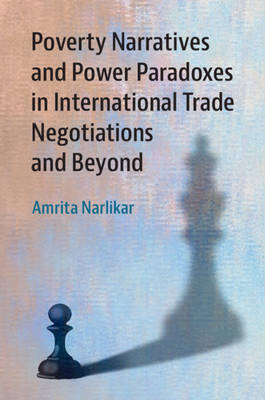
Poverty Narratives and Power Paradoxes in International Trade Negotiations and Beyond
Amrita Narlikar
Paperback | Engels
€ 56,45
+ 112 punten
Uitvoering
Omschrijving
In this work, Amrita Narlikar argues that, contrary to common assumption, modern-day politics displays a surprising paradox: poverty - and the powerlessness with which it is associated - has emerged as a political tool and a formidable weapon in international negotiation. The success of poverty narratives, however, means that their use has not been limited to the neediest. Focusing on behaviours and outcomes in a particularly polarising area of bargaining - international trade - and illustrating wider applications of the argument, Narlikar shows how these narratives have been effectively used. Yet, she also sheds light on how indiscriminate overuse and misuse increasingly run the risk of adverse consequences for the system at large, and devastating repercussions for the weakest members of society. Narlikar advances a theory of agency and empowerment by focusing on the life-cycles of narratives, and concludes by offering policy-relevant insights on how to construct winning and sustainable narratives.
Specificaties
Betrokkenen
- Auteur(s):
- Uitgeverij:
Inhoud
- Aantal bladzijden:
- 220
- Taal:
- Engels
Eigenschappen
- Productcode (EAN):
- 9781108401609
- Verschijningsdatum:
- 7/05/2020
- Uitvoering:
- Paperback
- Formaat:
- Trade paperback (VS)
- Afmetingen:
- 155 mm x 224 mm
- Gewicht:
- 317 g


Alleen bij Standaard Boekhandel
+ 112 punten op je klantenkaart van Standaard Boekhandel
AANGERADEN


Beoordelingen
We publiceren alleen reviews die voldoen aan de voorwaarden voor reviews. Bekijk onze voorwaarden voor reviews.