


- Afhalen na 1 uur in een winkel met voorraad
- Gratis thuislevering in België vanaf € 30
- Ruim aanbod met 7 miljoen producten
- Afhalen na 1 uur in een winkel met voorraad
- Gratis thuislevering in België vanaf € 30
- Ruim aanbod met 7 miljoen producten





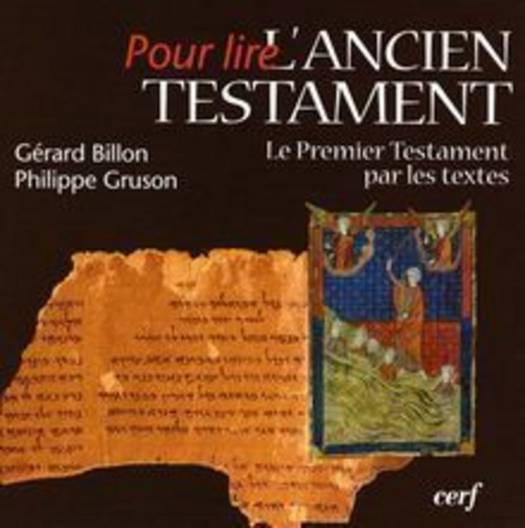
POUR LIRE L'ANCIEN TESTAMENT
le Premier Testament par les textes
Gruson Philippe, Billon Gerard
Paperback | Frans
€ 18,00
+ 36 punten
Omschrijving
L'Ancien Testament intimide : multiplicité des livres, diversité des styles, éloignement culturel voire religieux. Par où commencer ? Comment se repérer ? Un guide est nécessaire pour s'y retrouver. Le travail des spécialistes ces trente dernières années - depuis la parution du premier « Pour lire l'Ancien Testament » d'Étienne Charpentier - a été fructueux. Historiens, archéologues, exégètes, théologiens dégagent sans cesse de nouveaux éléments qui nous permettent d'atteindre à une meilleure connaissance de la Bible et de son contexte, le Proche-Orient ancien. Un bon guide se doit d'être à jour, de donner les indications dont le voyageur a besoin et de proposer des itinéraires de découverte adaptés. C'est dans cet esprit que les auteurs de ce nouveau « Pour lire » ont travaillé. Ils ont balisé un parcours : seize chapitres - introduisant à un livre ou à un ensemble de livres - explorent l'Ancien Testament, lui-même divisé en quatre parties : Pentateuque, Prophètes, Écrits, Livres deutérocanoniques. Chaque chapitre est structuré de la même manière : 1 - une brève présentation littéraire et historique 2 - un grand texte commenté 3 - une invitation à lire d'autres passages connus ou moins connus, 4 - des mises au point sur des notions essentielles. Des pistes de travail, des illustrations, des notices explicatives, des encadrés jalonnent ce parcours. En annexe, on trouvera également une anthologie de textes du Proche-Orient ancien, des cartes, un lexique, une bibliographie et diverses ouvertures culturelles et théologiques. Les groupes bibliques, les catéchistes, les prédicateurs pourront puiser dans cette mine de renseignements avec la certitude de disposer des indications de base essentielles. Le simple lecteur appréciera de disposer d'un manuel à la pédagogie sûre pour s'initier seul à l'Ancien Testament.
--
The Old Testament can be intimidating: so many different books, so many different styles, cultural and religious strangeness. Where should we begin? How can we find our paths? If we are to succeed, we need a guide. The work of specialists over the last thirty years - since the publication of the first ‘Pour lire l'Ancien Testament' by Étienne Charpentier - has born its fruit. Historians, archaeologists, exegetes, theologians are constantly discerning new elements that allow us to reach a better understanding of the Bible and its setting, the Near East in ancient times. But a good guide must be up to date, give the indications the traveller needs and suggest appropriate paths of discovery. The authors of the latest ‘Pour lire' title have worked with this requisite in mind. They have marked out a course: sixteen chapters - introducing the reader to one book or a group of books - exploring the Old Testament, which is itself divided into four parts: the Pentateuch, the Prophets, the Scriptures, the Deuterocanonical books. Each chapter is structured in the same way: 1 - a brief literary and historical presentation 2 - a longer text with commentary 3 - an invitation to read other well-known or lesser-known passages, 4 - reminders of essential notions. Suggestions for further studies, illustrations, explanatory notices, boxed texts appear throughout the book. In the annexe, readers will also find an anthology of texts from the ancient Near-East, maps, a glossary, a bibliography and various cultural and theological orientations for development. Bible groups, catechists, preachers will be able to draw on this mine of information with the assurance of finding the fundamental notions. The simple Bible-reader will appreciate an accessible and clear book for individual initiation to the Old Testament.
--
The Old Testament can be intimidating: so many different books, so many different styles, cultural and religious strangeness. Where should we begin? How can we find our paths? If we are to succeed, we need a guide. The work of specialists over the last thirty years - since the publication of the first ‘Pour lire l'Ancien Testament' by Étienne Charpentier - has born its fruit. Historians, archaeologists, exegetes, theologians are constantly discerning new elements that allow us to reach a better understanding of the Bible and its setting, the Near East in ancient times. But a good guide must be up to date, give the indications the traveller needs and suggest appropriate paths of discovery. The authors of the latest ‘Pour lire' title have worked with this requisite in mind. They have marked out a course: sixteen chapters - introducing the reader to one book or a group of books - exploring the Old Testament, which is itself divided into four parts: the Pentateuch, the Prophets, the Scriptures, the Deuterocanonical books. Each chapter is structured in the same way: 1 - a brief literary and historical presentation 2 - a longer text with commentary 3 - an invitation to read other well-known or lesser-known passages, 4 - reminders of essential notions. Suggestions for further studies, illustrations, explanatory notices, boxed texts appear throughout the book. In the annexe, readers will also find an anthology of texts from the ancient Near-East, maps, a glossary, a bibliography and various cultural and theological orientations for development. Bible groups, catechists, preachers will be able to draw on this mine of information with the assurance of finding the fundamental notions. The simple Bible-reader will appreciate an accessible and clear book for individual initiation to the Old Testament.
Specificaties
Betrokkenen
- Auteur(s):
- Uitgeverij:
Inhoud
- Aantal bladzijden:
- 188
- Taal:
- Frans
Eigenschappen
- Productcode (EAN):
- 9782204078184
- Verschijningsdatum:
- 1/01/2010
- Uitvoering:
- Paperback
- Afmetingen:
- 211 mm x 212 mm
- Gewicht:
- 356 g


Alleen bij Standaard Boekhandel
+ 36 punten op je klantenkaart van Standaard Boekhandel
Cadeau

AANGERADEN


Beoordelingen
We publiceren alleen reviews die voldoen aan de voorwaarden voor reviews. Bekijk onze voorwaarden voor reviews.