


- Afhalen na 1 uur in een winkel met voorraad
- Gratis thuislevering in België vanaf € 30
- Ruim aanbod met 7 miljoen producten
- Afhalen na 1 uur in een winkel met voorraad
- Gratis thuislevering in België vanaf € 30
- Ruim aanbod met 7 miljoen producten





€ 74,95
+ 149 punten
Omschrijving
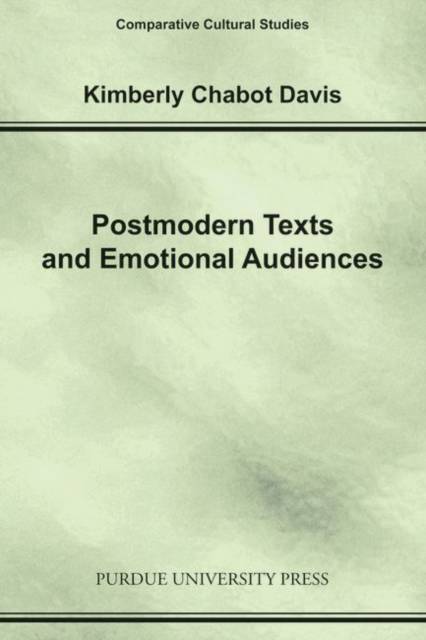
Chabot Davis analyzes contemporary texts that bond together two seemingly antithetical sensibilities: the sentimental and the postmodern. Ranging across multiple media and offering a methodological union of textual analysis and reception study, Chabot Davis presents case studies of audience responses. Chabot Davis argues that sentimental postmodernism deepened leftist political engagement by moving audiences to identify emotionally with people across the divisions of gender, sexual identity, race, and ethnicity. This study questions the critical equation of postmodernism with apocalyptic nihilism and political apathy. The book also challenges the assumption that sentimentality and sympathy are inherently conservative and imperialistic.
Specificaties
Betrokkenen
- Auteur(s):
- Uitgeverij:
Inhoud
- Aantal bladzijden:
- 227
- Taal:
- Engels
- Reeks:
Eigenschappen
- Productcode (EAN):
- 9781557534798
- Verschijningsdatum:
- 1/07/2007
- Uitvoering:
- Paperback
- Formaat:
- Trade paperback (VS)
- Afmetingen:
- 162 mm x 228 mm
- Gewicht:
- 376 g


Alleen bij Standaard Boekhandel
+ 149 punten op je klantenkaart van Standaard Boekhandel
Cadeau

AANGERADEN


Beoordelingen
We publiceren alleen reviews die voldoen aan de voorwaarden voor reviews. Bekijk onze voorwaarden voor reviews.