


- Afhalen na 1 uur in een winkel met voorraad
- Gratis thuislevering in België vanaf € 30
- Ruim aanbod met 7 miljoen producten
- Afhalen na 1 uur in een winkel met voorraad
- Gratis thuislevering in België vanaf € 30
- Ruim aanbod met 7 miljoen producten




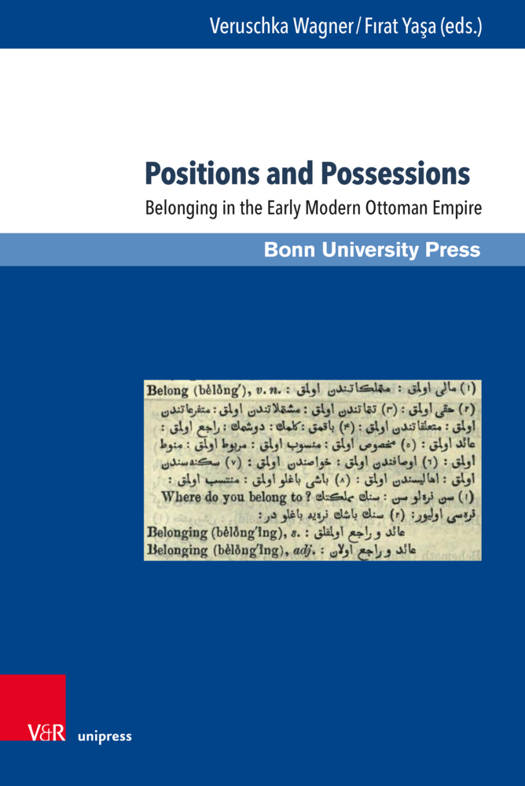
Positions and Possessions
Belonging in the Early Modern Ottoman Empire
€ 44,45
+ 88 punten
Omschrijving
The early modern Ottoman Empire offers a compelling context for exploring the many-sided and often fluid nature of belonging. Spanning vast territories and encompassing diverse ethnic, religious, and social groups, the Ottoman context reveals how this fundamental human relationship operated across religious, spatial, social, cultural, professional, and emotional dimensions simultaneously. Beyond the theoretically prescribed affiliations of legal classifications and social norms, factors like spatial proximity, individual career choices, and dependencies emerged as crucial markers. The fluidity of identity within this complex, multi-ethnic, multi-religious, and multilingual society is a key finding. The contributors demonstrate that while proximity fostered strong bonds of solidarity and shaped social hierarchy, belonging itself was often a fragile and volatile experience for both individuals and groups.
Specificaties
Betrokkenen
- Uitgeverij:
Inhoud
- Taal:
- Engels
- Reeks:
- Reeksnummer:
- nr. 12
Eigenschappen
- Productcode (EAN):
- 9783847119869
- Verschijningsdatum:
- 15/06/2026
- Uitvoering:
- Hardcover

Alleen bij Standaard Boekhandel
+ 88 punten op je klantenkaart van Standaard Boekhandel
Cadeau

AANGERADEN


Beoordelingen
We publiceren alleen reviews die voldoen aan de voorwaarden voor reviews. Bekijk onze voorwaarden voor reviews.