


- Afhalen na 1 uur in een winkel met voorraad
- Gratis thuislevering in België vanaf € 30
- Ruim aanbod met 7 miljoen producten
- Afhalen na 1 uur in een winkel met voorraad
- Gratis thuislevering in België vanaf € 30
- Ruim aanbod met 7 miljoen producten





€ 203,95
+ 407 punten
Omschrijving
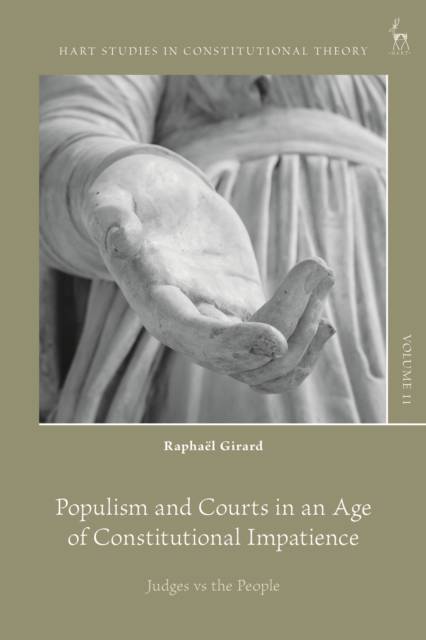
This book addresses one of the most pressing issues of our time: the rise of populism and its implications, particularly for courts and other legal institutions.
It questions and ultimately challenges the prevailing view in comparative constitutional law that courts can act as bulwarks against authoritarian, self-aggrandising populists in power. In doing so, it offers both a novel theoretical framework and a fresh contextual inquiry. Theoretically, the book uses the lens of spatiotemporality - the conjunction of space and time - to analyse populism as a constitutional project. It argues that contemporary populism is marked by constitutional impatience: a drive for temporal efficiency and spatial proximity that reshapes and reconfigures law's institutional and normative order. Contextually, the book focuses primarily on one key institution of liberal constitutional democracy: the judiciary. It offers a contextual analysis of three case studies: Armenia, Ecuador and the United Kingdom. In doing so, it not only highlights populism's reach beyond established democracies but also brings fresh insights from understudied jurisdictions at the periphery or in the Global South. Overall, the book suggests that populism's relationship with constitutionalism is complex and context-dependent. Instead of yielding uniform outcomes, it produces divergent tensions and impacts, thereby challenging assumptions about both the institutional role of courts and the nature of constitutionalism itself.Specificaties
Betrokkenen
- Auteur(s):
- Uitgeverij:
Inhoud
- Aantal bladzijden:
- 320
- Taal:
- Engels
- Reeks:
Eigenschappen
- Productcode (EAN):
- 9781509987542
- Verschijningsdatum:
- 16/04/2026
- Uitvoering:
- Hardcover
- Formaat:
- Genaaid
- Afmetingen:
- 156 mm x 234 mm
- Gewicht:
- 616 g



Alleen bij Standaard Boekhandel
+ 407 punten op je klantenkaart van Standaard Boekhandel
Cadeau

AANGERADEN


Beoordelingen
We publiceren alleen reviews die voldoen aan de voorwaarden voor reviews. Bekijk onze voorwaarden voor reviews.