



- Afhalen na 1 uur in een winkel met voorraad
- In januari gratis thuislevering in België
- Ruim aanbod met 7 miljoen producten
- Afhalen na 1 uur in een winkel met voorraad
- In januari gratis thuislevering in België
- Ruim aanbod met 7 miljoen producten





Omschrijving
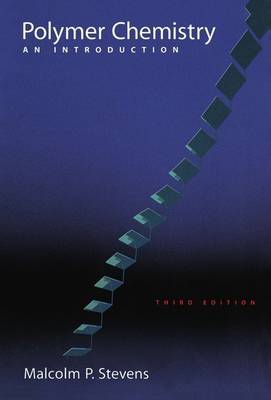
Now updated to incorporate recent developments in the field, the third edition of this successful text offers an excellent introduction to polymer chemistry. Ideal for graduate students, advanced undergraduates, and industrial chemists who work with polymers, it is the only current polymer textbook that discusses polymer types according to functional groups. It provides a comprehensive and up-to-date overview of the chemistry of macromolecular substances, with particular emphasis on polymers that are important commercially and the properties that make them important. Major topics include polymer synthesis and nomenclature; molecular weight and molecular weight distribution; reactions of polymers; recycling of polymers; methods used for characterizing and testing polymers; morphology; stereoregular polymers; polymer blends; step-growth, chain-growth, and ring-opening polymerization; commercially important addition and condensation polymers; and heterocyclic, inorganic, and natural polymers. Review exercises, many including journal references, are provided to help lead students into the polymer literature. Polymer Chemistry, 3/e, offers the most up-to-date treatment available of new developments in this rapidly changing field. It covers dendritic and hyperbranched polymers, olefin polymerization using metallocene catalysts, living free radical polymerization, biodegradable bacterial polyesters, mass spectrometric methods for determining molecular weights of polymers, atomic force microscopy for characterizing polymer surfaces, and polymers exhibiting nonlinear optical properties.


Alleen bij Standaard Boekhandel
+ 359 punten op je klantenkaart van Standaard Boekhandel
Cadeau

AANGERADEN


Beoordelingen
We publiceren alleen reviews die voldoen aan de voorwaarden voor reviews. Bekijk onze voorwaarden voor reviews.