


- Afhalen na 1 uur in een winkel met voorraad
- Gratis thuislevering in België vanaf € 30
- Ruim aanbod met 7 miljoen producten
- Afhalen na 1 uur in een winkel met voorraad
- Gratis thuislevering in België vanaf € 30
- Ruim aanbod met 7 miljoen producten





€ 36,42
+ 36 punten
Uitvoering
Omschrijving
A novel conceptualization of the politics of walls and other surfaces by bringing together critical cultural and media theory and post-communist studies of urban space.
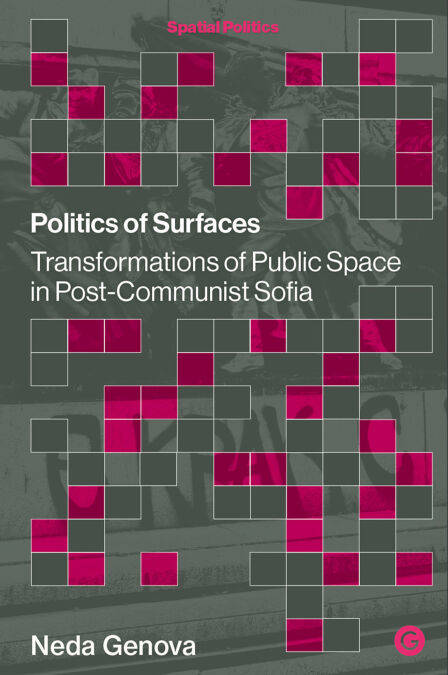
What does it mean to examine post-communist politics through the prism of the material and semiotic transformations and modifications of surfaces? A rethinking of surfaces as dynamic and complex sites opens a path for a detailed study of their crucial role in the governing of post-communist urban space—but also of the forms of subversion that can be discerned through interventions on and with surfaces. The book explores a set of surfaces—Wall, Monument, Electricity Boxes, Memes, and Paving Brick—to investigate the kind of political engagement they enable and foreclose in post-communist Sofia, Bulgaria. The examination of each of these sites draws on an array of interconnected theoretical propositions, pertaining to surfaces’ conceptualization as temporal, fictitious and relational objects engaged in the production of political meaning.
Politics of Surfaces brings critical cultural and media theory, philosophy, and post-communist studies into conversation with each other, allowing for a two-fold political and theoretical intervention. On the one hand, it intervenes in existing scholarship on surfaces by demonstrating the stakes of their politicised understanding as complex spatio-temporal objects. On the other hand, it permits the crossing of disciplinary boundaries in the field of post-communist studies (usually reserved for area studies approaches). This involves a rethinking of some of the common presumptions about the post-communist condition such as its apolitical character, the governmental logic of temporal belatedness and the dominance of a memory studies approach for the analysis of post-communist transformations of public heritage sites such as monuments.
What does it mean to examine post-communist politics through the prism of the material and semiotic transformations and modifications of surfaces? A rethinking of surfaces as dynamic and complex sites opens a path for a detailed study of their crucial role in the governing of post-communist urban space—but also of the forms of subversion that can be discerned through interventions on and with surfaces. The book explores a set of surfaces—Wall, Monument, Electricity Boxes, Memes, and Paving Brick—to investigate the kind of political engagement they enable and foreclose in post-communist Sofia, Bulgaria. The examination of each of these sites draws on an array of interconnected theoretical propositions, pertaining to surfaces’ conceptualization as temporal, fictitious and relational objects engaged in the production of political meaning.
Politics of Surfaces brings critical cultural and media theory, philosophy, and post-communist studies into conversation with each other, allowing for a two-fold political and theoretical intervention. On the one hand, it intervenes in existing scholarship on surfaces by demonstrating the stakes of their politicised understanding as complex spatio-temporal objects. On the other hand, it permits the crossing of disciplinary boundaries in the field of post-communist studies (usually reserved for area studies approaches). This involves a rethinking of some of the common presumptions about the post-communist condition such as its apolitical character, the governmental logic of temporal belatedness and the dominance of a memory studies approach for the analysis of post-communist transformations of public heritage sites such as monuments.
Specificaties
Betrokkenen
- Auteur(s):
- Uitgeverij:
Inhoud
- Aantal bladzijden:
- 240
- Taal:
- Engels
- Reeks:
Eigenschappen
- Productcode (EAN):
- 9781915983350
- Verschijningsdatum:
- 17/08/2026
- Uitvoering:
- E-book
- Beveiligd met:
- Adobe DRM
- Formaat:
- ePub


Alleen bij Standaard Boekhandel
+ 36 punten op je klantenkaart van Standaard Boekhandel
AANGERADEN


Beoordelingen
We publiceren alleen reviews die voldoen aan de voorwaarden voor reviews. Bekijk onze voorwaarden voor reviews.