


- Afhalen na 1 uur in een winkel met voorraad
- Gratis thuislevering in België vanaf € 30
- Ruim aanbod met 7 miljoen producten
- Afhalen na 1 uur in een winkel met voorraad
- Gratis thuislevering in België vanaf € 30
- Ruim aanbod met 7 miljoen producten




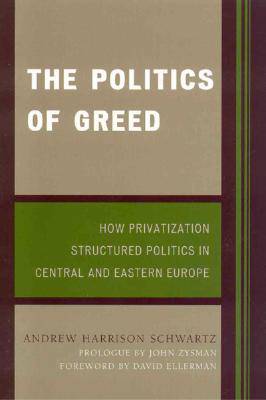
Politics of Greed
How Privatization Structured Politics in Central and Eastern Europe
Andrew Harrison Schwartz
€ 115,45
+ 230 punten
Omschrijving
An in-depth political history of privatization in Central and Eastern Europe, The Politics of Greed demonstrates that the way that assets are privatized matters, both with respect to national economic performance and the successful development of the rule of law. Andrew Harrison Schwartz had unprecedented access to high-level Czech government officials during the Czech Republic's privatization process. This book is the result of the unique insights he gained and the innovative analytical framework he subsequently developed-ownership regime theory-which for the first time places ownership structures at the center of analysis of political transitions. Engaging and important, this book applies ownership regime theory to a broad range of post-communist privatization cases, including those of the Czech Republic, Poland, Hungary, Russia, and Ukraine.
Specificaties
Betrokkenen
- Auteur(s):
- Uitgeverij:
Inhoud
- Aantal bladzijden:
- 380
- Taal:
- Engels
- Reeks:
Eigenschappen
- Productcode (EAN):
- 9780742553088
- Verschijningsdatum:
- 1/08/2006
- Uitvoering:
- Paperback
- Formaat:
- Trade paperback (VS)
- Afmetingen:
- 149 mm x 230 mm
- Gewicht:
- 553 g


Alleen bij Standaard Boekhandel
+ 230 punten op je klantenkaart van Standaard Boekhandel
AANGERADEN


Beoordelingen
We publiceren alleen reviews die voldoen aan de voorwaarden voor reviews. Bekijk onze voorwaarden voor reviews.