


- Afhalen na 1 uur in een winkel met voorraad
- Gratis thuislevering in België vanaf € 30
- Ruim aanbod met 7 miljoen producten
- Afhalen na 1 uur in een winkel met voorraad
- Gratis thuislevering in België vanaf € 30
- Ruim aanbod met 7 miljoen producten





€ 50,95
+ 101 punten
Omschrijving
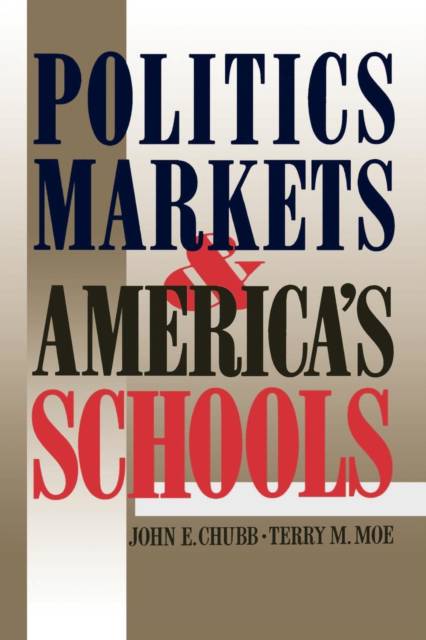
During the 1980s, widespread dissatisfaction with America's schools gave rise to a powerful movement for educational change, and the nation's political institutions responded with aggressive reforms. Chubb and Moe argue that these reforms are destined to fail because they do not get to the root of the problem. The fundamental causes of poor academic performance, they claim, are not to be found in the schools, but rather in the institutions of direct democratic control by which the schools have traditionally been governed. Reformers fail to solve the problem-when the institutions ARE the problem. The authors recommend a new system of public education, built around parent-student choice and school competition, that would promote school autonomy--thus providing a firm foundation for genuine school improvement and superior student achievement.
Specificaties
Betrokkenen
- Auteur(s):
- Uitgeverij:
Inhoud
- Aantal bladzijden:
- 340
- Taal:
- Engels
Eigenschappen
- Productcode (EAN):
- 9780815714095
- Verschijningsdatum:
- 1/06/1990
- Uitvoering:
- Paperback
- Formaat:
- Trade paperback (VS)
- Afmetingen:
- 152 mm x 233 mm
- Gewicht:
- 508 g


Alleen bij Standaard Boekhandel
+ 101 punten op je klantenkaart van Standaard Boekhandel
Cadeau

AANGERADEN


Beoordelingen
We publiceren alleen reviews die voldoen aan de voorwaarden voor reviews. Bekijk onze voorwaarden voor reviews.