


- Afhalen na 1 uur in een winkel met voorraad
- Gratis thuislevering in België vanaf € 30
- Ruim aanbod met 7 miljoen producten
- Afhalen na 1 uur in een winkel met voorraad
- Gratis thuislevering in België vanaf € 30
- Ruim aanbod met 7 miljoen producten





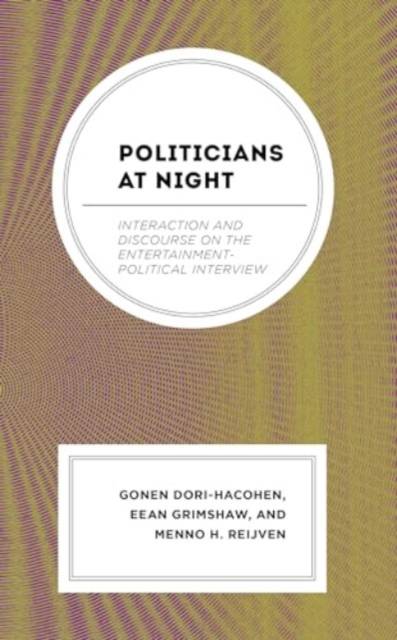
Politicians at Night
Interaction and Discourse on the Entertainment-Political Interview
Gonen Dori-Hacohen, Eean Grimshaw, Menno H Reijven
€ 186,95
+ 373 punten
Omschrijving
Politicians at Night: Interaction and Discourse on the Entertainment-Political Interview studies the exchanges between presidential candidates and talk show hosts on broadcast late-night shows in the United States. Gonen Dori-Hacohen; Eean Grimshaw and Menno H. Reijven use various language and social interaction frameworks, including membership categorization analysis, conversation analysis, narrative analysis, and semiotics. They develop a broad understanding of the Entertainment-Political Interview (EPI) and cultural role. They discuss how politicians use pronouns to achieve inclusion and exclusion. Similarly, the authors demonstrate how and why the hosts ask softball questions. Unlike these two elements that create politics, the authors demonstrate how politicians use stories to present themselves like celebrities. They then demonstrate how politicians intersect with entertainment when they analyze one specific segment called "Slow Jam the News," on The Tonight Show with Jimmy Fallon.The linking of the politician to entertainment is part of the final argument of the book, where the authors critically examine the EPI as part of a myth since it vacates the politics of its original form while maintaining a façade of politics.EPI promotes a capitalist neoliberal ideology that is at the root of both entertainment and politics in the U.S.
Specificaties
Betrokkenen
- Auteur(s):
- Uitgeverij:
Inhoud
- Aantal bladzijden:
- 220
- Taal:
- Engels
- Reeks:
Eigenschappen
- Productcode (EAN):
- 9781666910605
- Verschijningsdatum:
- 14/02/2024
- Uitvoering:
- Hardcover
- Formaat:
- Genaaid
- Afmetingen:
- 152 mm x 229 mm
- Gewicht:
- 494 g



Alleen bij Standaard Boekhandel
+ 373 punten op je klantenkaart van Standaard Boekhandel
Cadeau

AANGERADEN


Beoordelingen
We publiceren alleen reviews die voldoen aan de voorwaarden voor reviews. Bekijk onze voorwaarden voor reviews.