


- Afhalen na 1 uur in een winkel met voorraad
- Gratis thuislevering in België vanaf € 30
- Ruim aanbod met 7 miljoen producten
- Afhalen na 1 uur in een winkel met voorraad
- Gratis thuislevering in België vanaf € 30
- Ruim aanbod met 7 miljoen producten





€ 40,40
Omschrijving
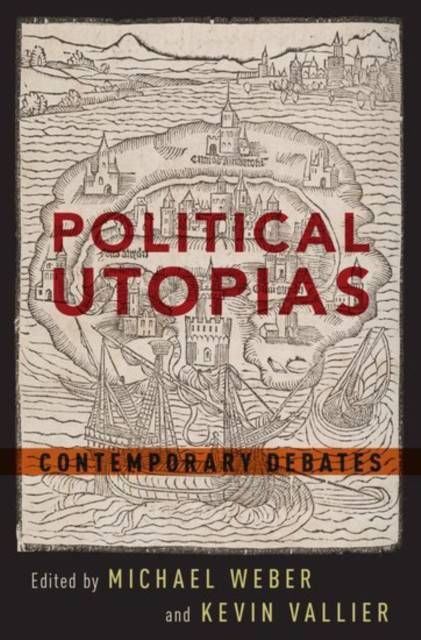
Political theory, from antiquity to the present, has been divided over the relationship between the requirements of justice and the limitations of persons and institutions to meet those requirements. Some theorists hold that a theory of justice should be utopian or idealistic--that the derivation of the correct principles of justice should not take into account human and institutional limitations. Others insist on a realist or non-utopian view, according to which feasibility--facts about what is possible given human and institutional limitations--is a constraint on principles of justice. In recent years, the relationship between the ideal and the real has become the subject of renewed scholarly interest. This anthology aims to represent the contemporary state of this classic debate. By and large, contributors to the volume deny that the choice between realism and idealism is binary. Rather, there is a continuum between realism and idealism that locates these extremes of each view at opposite poles. The contributors, therefore, tend to occupy middle positions, only leaning in the ideal or non-ideal direction. Together, their contributions not only represent a wide array of attractive positions in the new literature on the topic, but also collectively advance how we understand the difference between idealism and realism itself.
Specificaties
Betrokkenen
- Auteur(s):
- Uitgeverij:
Inhoud
- Aantal bladzijden:
- 272
- Taal:
- Engels
Eigenschappen
- Productcode (EAN):
- 9780190280604
- Verschijningsdatum:
- 11/04/2017
- Uitvoering:
- Paperback
- Formaat:
- Trade paperback (VS)
- Afmetingen:
- 155 mm x 231 mm
- Gewicht:
- 408 g



Alleen bij Standaard Boekhandel
Cadeau

AANGERADEN


Beoordelingen
We publiceren alleen reviews die voldoen aan de voorwaarden voor reviews. Bekijk onze voorwaarden voor reviews.