


- Afhalen na 1 uur in een winkel met voorraad
- Gratis thuislevering in België vanaf € 30
- Ruim aanbod met 7 miljoen producten
- Afhalen na 1 uur in een winkel met voorraad
- Gratis thuislevering in België vanaf € 30
- Ruim aanbod met 7 miljoen producten





Omschrijving
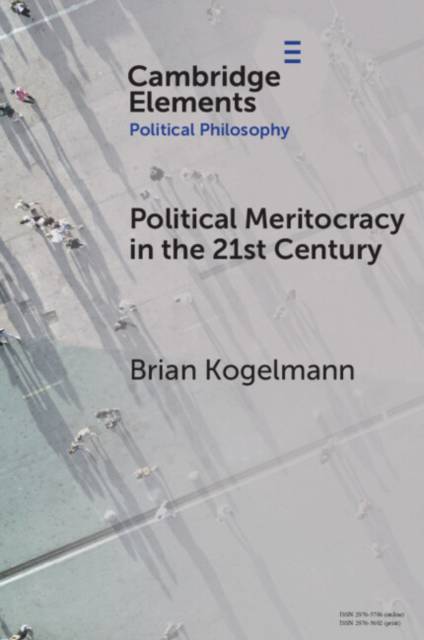
Political meritocrats believe political power should be allocated according to virtue and competence. It is an old idea, going back at least to Plato. But what is old is new again, as several political philosophers have recently proposed and defended novel articulations of this ancient idea. The purpose of this short monograph is to offer a critical overview of this literature. I cover three schools of thought. I first look at epistocracy, a form of government identical to modern liberal democracies, except voting power is allocated to citizens according to competence. I then turn to Confucian meritocracy, where more blatantly nondemocratic forms of political meritocracy are defended. I finally look at democratic meritocracy, which is the idea that elections either do or could (if they were appropriately reformed) select virtuous and competent leaders. I end by offering reasons to think the entire enterprise of political meritocracy rests on a mistake.
Specificaties
Betrokkenen
- Auteur(s):
- Uitgeverij:
Inhoud
- Aantal bladzijden:
- 76
- Taal:
- Engels
- Reeks:
Eigenschappen
- Productcode (EAN):
- 9781009605847
- Verschijningsdatum:
- 8/01/2026
- Uitvoering:
- Paperback
- Formaat:
- Trade paperback (VS)
- Afmetingen:
- 152 mm x 229 mm
- Gewicht:
- 113 g


Alleen bij Standaard Boekhandel
+ 66 punten op je klantenkaart van Standaard Boekhandel
AANGERADEN


Beoordelingen
We publiceren alleen reviews die voldoen aan de voorwaarden voor reviews. Bekijk onze voorwaarden voor reviews.