


- Afhalen na 1 uur in een winkel met voorraad
- Gratis thuislevering in België vanaf € 30
- Ruim aanbod met 7 miljoen producten
- Afhalen na 1 uur in een winkel met voorraad
- Gratis thuislevering in België vanaf € 30
- Ruim aanbod met 7 miljoen producten





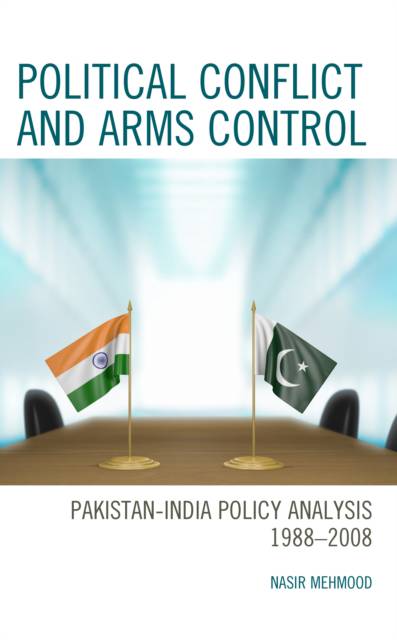
Political Conflict and Arms Control
Pakistan-India Policy Analysis 1988-2008
Nasir Mehmood
Hardcover | Engels
€ 220,45
+ 440 punten
Omschrijving
This book offers a comprehensive analysis of the evolution and development of arms control processes as an integral part of the Pakistan-India grand dialogue, which took place from 1988 to 2008 and it examines the larger political context and its impact on arms control processes. Nasir Mehmood prioritizes four types of political conflicts: Jammu and Kashmir, hostile domestic politics, dissimilar military doctrines, and China as a third party. Mehmood determines their connection and function in restricting arms control during three major rounds of broader security dialogue between Pakistan and India (1988-1994, 1997-1999, and 2004-2008). Through these major rounds of dialogue there are patterns of interaction within and across three sub-cases. This volume, which offers a systematic survey of bilateral arms control processes within the local settings and includes critical theoretical and policy insights, shall be of interest to students and scholars interested in security studies and international relations theory, with a focus on the strategic horizon of South Asia.
Specificaties
Betrokkenen
- Auteur(s):
- Uitgeverij:
Inhoud
- Aantal bladzijden:
- 290
- Taal:
- Engels
Eigenschappen
- Productcode (EAN):
- 9781666906561
- Verschijningsdatum:
- 15/02/2023
- Uitvoering:
- Hardcover
- Formaat:
- Genaaid
- Afmetingen:
- 152 mm x 229 mm
- Gewicht:
- 594 g


Alleen bij Standaard Boekhandel
+ 440 punten op je klantenkaart van Standaard Boekhandel
AANGERADEN


Beoordelingen
We publiceren alleen reviews die voldoen aan de voorwaarden voor reviews. Bekijk onze voorwaarden voor reviews.