


- Afhalen na 1 uur in een winkel met voorraad
- Gratis thuislevering in België vanaf € 30
- Ruim aanbod met 7 miljoen producten
- Afhalen na 1 uur in een winkel met voorraad
- Gratis thuislevering in België vanaf € 30
- Ruim aanbod met 7 miljoen producten





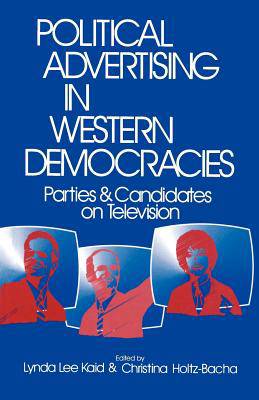
Political Advertising in Western Democracies
Parties and Candidates on Television
Lynda Lee Kaid, Christina Holtz-Bacha
Paperback | Engels
€ 177,45
+ 354 punten
Omschrijving
An interesting study about political advertising on TV.... The material in the book can work as a good guide for both the Ministry of information and Broadcasting (including Doordarshan bosses) and major political parties while preparing to use TV as an effective medium for the next election campaign. --The Hindustan Times "This invaluable work significantly advances the cross-national, comparative study of political advertising broadly defined. In pellucid prose, the editors and contributors identify commonalities and differences among media systems, regulations, contents, and styles and point to their likely impact and effects. It is essential reading." --David L. Paletz, Duke University In recent years, political campaigns in Western democracies have increasingly relied on television advertising to promote candidates and/or political parties. Although North America was the first to channel political messages in this way and many European campaigns have been based on the U.S. model, Political Advertising in Western Democracies highlights the differences as well as the similarities of campaigns in Western democracies. The various campaign styles, their methods, and approaches reflect the unique political and cultural traditions of each country. Viewed individually and comparatively, they formulate the first comprehensive study to date on the role that television plays in the electoral process. The chapters, written by well-known contributors, are all based on original research of the most recent campaigns in England, France, Germany, Italy, Israel, Denmark, the Netherlands, Finland, and the United States. An invaluable resource for anyone interested in this topic, Political Advertising in Western Democracies is also an ideal supplement for courses such as Survey of Political Communication, Mass Communication and Politics, International Communication, Political Advertising, Comparative Political Communication, and Political Campaigning.
Specificaties
Betrokkenen
- Auteur(s):
- Uitgeverij:
Inhoud
- Aantal bladzijden:
- 248
- Taal:
- Engels
Eigenschappen
- Productcode (EAN):
- 9780803953529
- Verschijningsdatum:
- 14/12/1994
- Uitvoering:
- Paperback
- Formaat:
- Trade paperback (VS)
- Afmetingen:
- 140 mm x 216 mm
- Gewicht:
- 322 g


Alleen bij Standaard Boekhandel
+ 354 punten op je klantenkaart van Standaard Boekhandel
Wedstrijd


Beoordelingen
We publiceren alleen reviews die voldoen aan de voorwaarden voor reviews. Bekijk onze voorwaarden voor reviews.