



Bedankt voor het vertrouwen het afgelopen jaar! Om jou te bedanken bieden we GRATIS verzending (in België) aan op alles gedurende de hele maand januari.
- Afhalen na 1 uur in een winkel met voorraad
- In januari gratis thuislevering in België
- Ruim aanbod met 7 miljoen producten
Bedankt voor het vertrouwen het afgelopen jaar! Om jou te bedanken bieden we GRATIS verzending (in België) aan op alles gedurende de hele maand januari.
- Afhalen na 1 uur in een winkel met voorraad
- In januari gratis thuislevering in België
- Ruim aanbod met 7 miljoen producten





Omschrijving
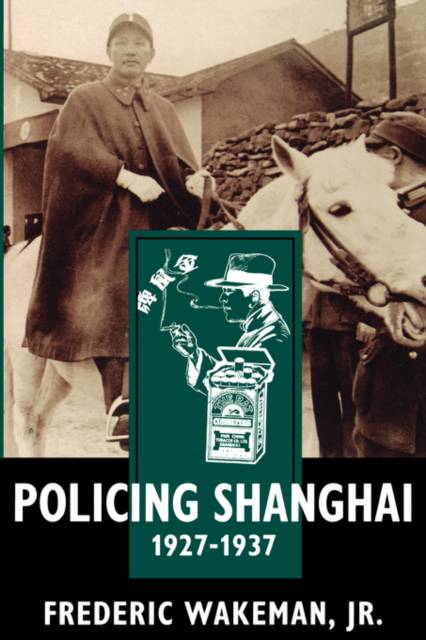
Prewar Shanghai: casinos, brothels, Green Gang racketeers, narcotics syndicates, gun-runners, underground Communist assassins, Comitern secret agents. Frederic Wakeman's masterful study of the most colorful and corrupt city in the world at the time provides a panoramic view of the confrontation and collaboration between the Nationalist secret police and the Shanghai underworld.
In detailing the life and politics of China's largest urban center during the Guomindang era, Wakeman covers an array of topics: the puritanical social controls implemented by the police; the regional differences that surfaced among Shanghai's Chinese, the influence of imperialism and Western-trained officials. Parts of this book read like a spy novel, with secret police, torture, assassination; and power struggles among the French, International Settlement, and Japanese consular police within Shanghai.
Chiang Kai-shek wanted to prove that the Chinese could rule Shanghai and the country by themselves, rather than be exploited and dominated by foreign powers. His efforts to reclaim the crime-ridden city failed, partly because of the outbreak of war with Japan in 1937, but also because the Nationalist police force was itself corrupted by the city.
Wakeman's exhaustively researched study is a major contribution to the study of the Nationalist regime and to modern Chinese urban history. It also shows that twentieth-century China has not been characterized by discontinuity, because autocratic government--whether Nationalist or Communist--has prevailed.
In detailing the life and politics of China's largest urban center during the Guomindang era, Wakeman covers an array of topics: the puritanical social controls implemented by the police; the regional differences that surfaced among Shanghai's Chinese, the influence of imperialism and Western-trained officials. Parts of this book read like a spy novel, with secret police, torture, assassination; and power struggles among the French, International Settlement, and Japanese consular police within Shanghai.
Chiang Kai-shek wanted to prove that the Chinese could rule Shanghai and the country by themselves, rather than be exploited and dominated by foreign powers. His efforts to reclaim the crime-ridden city failed, partly because of the outbreak of war with Japan in 1937, but also because the Nationalist police force was itself corrupted by the city.
Wakeman's exhaustively researched study is a major contribution to the study of the Nationalist regime and to modern Chinese urban history. It also shows that twentieth-century China has not been characterized by discontinuity, because autocratic government--whether Nationalist or Communist--has prevailed.
Specificaties
Betrokkenen
- Auteur(s):
- Uitgeverij:
Inhoud
- Aantal bladzijden:
- 478
- Taal:
- Engels
Eigenschappen
- Productcode (EAN):
- 9780520207615
- Verschijningsdatum:
- 6/11/1996
- Uitvoering:
- Paperback
- Formaat:
- Trade paperback (VS)
- Afmetingen:
- 145 mm x 230 mm
- Gewicht:
- 811 g


Alleen bij Standaard Boekhandel
+ 142 punten op je klantenkaart van Standaard Boekhandel
SOLDEN


Beoordelingen
We publiceren alleen reviews die voldoen aan de voorwaarden voor reviews. Bekijk onze voorwaarden voor reviews.